
How To Pack for Long Term Travel (Without Overpacking or Sacrificing Comfort)

How to pack for long term travel without overpacking. Discover a simple system for comfort, flexibility, and stress-free travel.
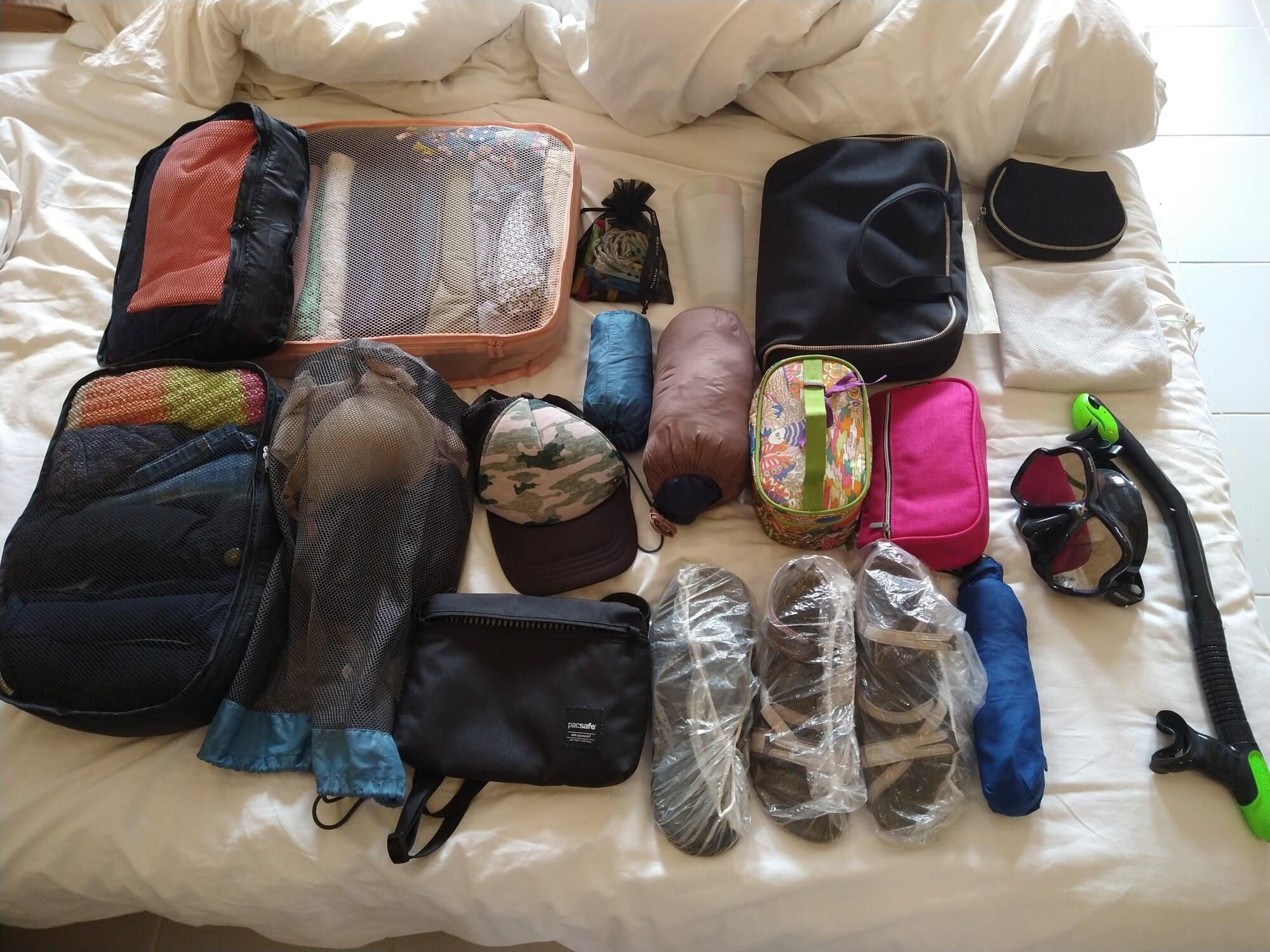
We still remember our first attempt at packing for long-term travel… and honestly, it was a bit of a mess.
We packed for every possible scenario i.e. extra clothes “just in case”, too many shoes, bulky items we thought we’d need, and far more than we ever actually used. At the time, it felt like the right thing to do. After all, when you’re leaving home for a year, it’s hard not to overprepare.
Fast forward to now. After more than 8 years of full-time travel, our approach looks very different.
These days, we travel with:
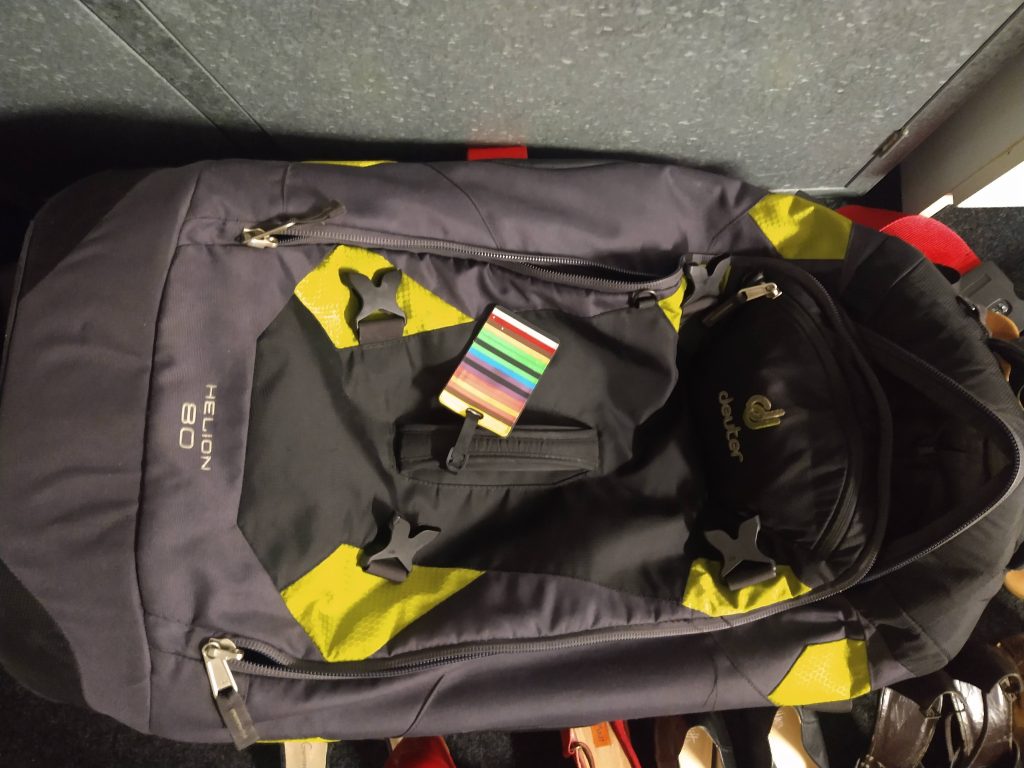
- 1 checked 80L hybrid suitcase (17–18kg) each
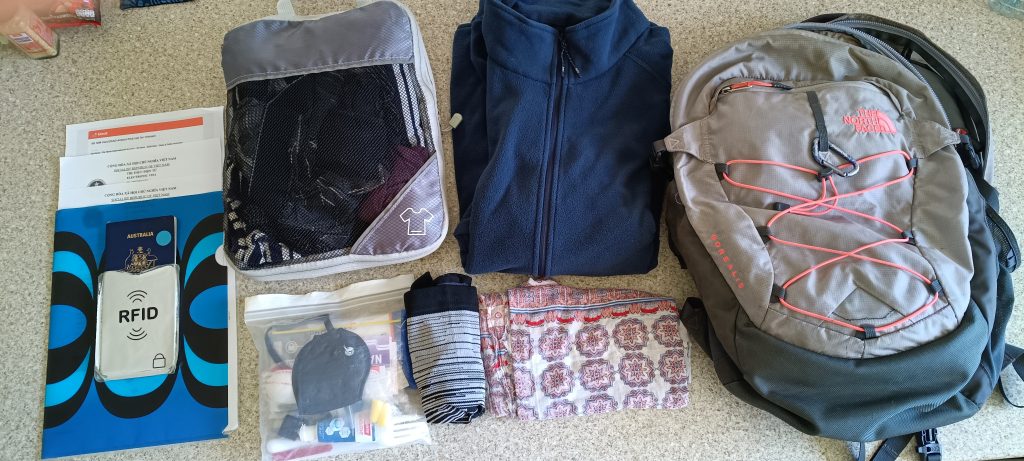
- 1 carry-on 7kg bag each for tech and personal essentials
We’re not ultra-minimalists. We still bring items we genuinely enjoy and use such as our favourite skincare, a good pillow, and even a few small kitchen essentials. But we’ve found a balance that works: packing light enough to stay mobile, but comfortably enough to enjoy the lifestyle long-term.
And that’s where most packing advice falls short.
Many vlogs and blogs push extreme minimalist packing i.e. carry-on only, ultra-light, bare essentials. While that works for some travellers, it’s not always realistic (or enjoyable) for long-term travel, especially if you value comfort, routine, and sustainability over months or years on the road.
So in this guide, we’re going to show you a different approach.
- A simple, practical packing system based on real experience
- A way to pack lighter without sacrificing comfort
- And most importantly, how to pack in a way that actually works for long-term travel, not just a two-week holiday
If you’re planning a bigger lifestyle shift, our complete nomadic retirement roadmap walks through everything you need to get started.
Packing For Long-Term Travel: Key Takeaways
Packing for long-term travel doesn’t have to be complicated. After years on the road, we’ve found that it all comes down to a few simple principles:
- The goal isn’t to pack as little as possible, it’s to pack in a way you can live with long-term, staying mobile, organised, and comfortable.
- Only pack items that earn their place in your bag. If you can’t wear it multiple ways, use it regularly, or replace it easily, it likely doesn’t belong.
- Build a versatile wardrobe that mixes and matches easily, works across different situations, and feels comfortable for everyday wear.
- Use a repeatable packing system that keeps you organised, saves time on travel days, and reduces stress when moving locations.
- Adjust your packing based on your travel style, including your pace, activities, and personal comfort level.
- Focus on what you actually use rather than “just in case” items, prioritising value, function, and practicality.
- Keep your long term travel packing list simple, flexible, and adaptable to different destinations, routines, and environments.
- Accept that your packing will evolve over time. Start simple, learn as you go, and refine your system through real experience.
The Long-Term Travel Packing Mindset (Why Most Advice Falls Short)
If you’ve spent any time researching how to pack for long-term travel, you’ve probably noticed a common theme:
“Pack as little as possible.”
“Carry-on only.”
“You don’t need much.”
And while there’s truth in that… it’s not the full picture.
After years of full-time travel, we’ve realised that extreme minimalism isn’t always practical (or enjoyable) for long-term travel.
What matters more is finding a balance between mobility and comfort.
Why Over-Minimalism Doesn’t Work for Everyone
Minimalist packing advice is often designed for:
- Short trips
- Backpackers moving quickly
- Travellers willing to sacrifice comfort for flexibility
But long-term travel, especially as a retired nomad, is different.
You’re not just travelling for a few weeks. You’re living on the road.
That means:
- You want routines
- You value comfort
- You need items that support daily life (not just sightseeing)
We’ve found that stripping everything back too far can actually create more stress over time. We found we were constantly replacing things, feeling unprepared, or missing small comforts that make life easier.
Our Packing Philosophy After 8+ Years of Full-Time Travel
Over time, we’ve developed a simple approach: Pack light, but pack smart.
We prioritise:
- Adaptability over strict minimalism
- Comfort over extreme restriction
- Functionality over “just in case” items
There are a few things we always travel with that many minimalist guides would tell you to leave behind like:
- A good pillow
- A few small kitchen essentials (sharp knife, peeler, bag clips)
- Vitamins and personal items we know work for us
Why? Because after years on the road, we know these items improve our day-to-day life and aren’t always easy to replace depending on where we are.
We’ve also learned that travel is rarely as fragile as people think.
In all our years, we’ve only had our luggage miss a connecting flight once, and we had it back within 24 hours. By travelling with checked luggage, we’ve never stressed about our packing system or weight limits.
The One Rule That Changed How We Pack
If there’s one idea that has made the biggest difference to how we pack, it’s this: We pack for our laundry cycle.
This completely changes your mindset.
Instead of packing for months, you:
- Pack for 1–2 weeks maximum
- Plan to wash and re-wear clothes
- Focus on versatility, not volume
We also follow a simple rule: 1 item in = 1 item out
This keeps our bags from slowly expanding over time (which they will if you let them!).
How To Decide What To Pack for Long-Term Travel
One of the biggest challenges with long-term travel packing isn’t how to pack, it’s deciding what actually deserves a place in your bag.
After years of trial and error, we’ve developed a simple framework that removes the guesswork and makes packing far less overwhelming.
Packing is just one part of the journey. Our step-by-step system for planning long-term travel covers how we organise everything from destinations to logistics.
Step 1: Pack for 1–2 Weeks Only
No matter how long your trip is (3 months, 6 months, or even years), you only need to pack for a short cycle.
1–2 weeks is the sweet spot
This works because:
- Laundry is available almost everywhere
- You’ll naturally re-wear favourite items
- It keeps your bag manageable and organised
Once you embrace this, packing becomes much easier, and much lighter.
Step 2: Choose Versatile, Multi-Purpose Items
Instead of packing more clothes, focus on what each item can do.
We always prioritise:
- Neutral colours that mix and match easily
- Pieces that work across multiple situations
- Items that can be dressed up or down
Examples of multi-purpose items we love:
- A scarf (warmth, modesty, beach towel, travel blanket)
- Lightweight layers for changing climates
The goal is to create more outfit combinations, not more items.
Step 3: Focus on Fabric & Function
Fabric choice makes a huge difference when travelling long-term.
We look for:
- Quick-dry materials (essential for frequent washing)
- Breathable fabrics (especially in hot climates)
- Odour-resistant clothing (we’ve had great results with Ably apparel, especially their t-shirts)
This allows you to:
- Wash clothes easily
- Dry them overnight if needed
- Wear clothes multiple times
- Pack fewer items overall
Step 4: Plan for Culture & Climate
Long-term travel often means moving between very different environments.
We always consider:
- Modesty requirements (temples, local customs)
- Weather changes (tropical vs. cooler climates)
- Layering options for flexibility
Packing with cultural awareness helps you avoid buying unnecessary items later.
Step 5: Accept You’ll Buy Things Along the Way
This is a mindset shift that takes time, but it’s incredibly freeing.
You don’t need to bring everything with you.
If you forget something:
- You can usually buy it locally
- It’s often cheaper than expected
- You’ll adapt quickly
Trying to prepare for every possible scenario is one of the fastest ways to overpack.
Step 6: Prioritise What Actually Improves Your Daily Life
This is where our approach differs slightly from strict minimalist advice.
We deliberately choose to pack a few items that:
- We enjoy using
- Improve comfort and routine
- Aren’t always easy to replace
For us, that includes things like:
- Our favourite toiletries and skincare
- A few small kitchen essentials
- Items we know work for us
- Pillows so we can get a good night’ sleep
Long-term travel isn’t just about moving, it’s about living comfortably on the road.
Your Clothing Strategy: Building a Capsule Wardrobe for Travel
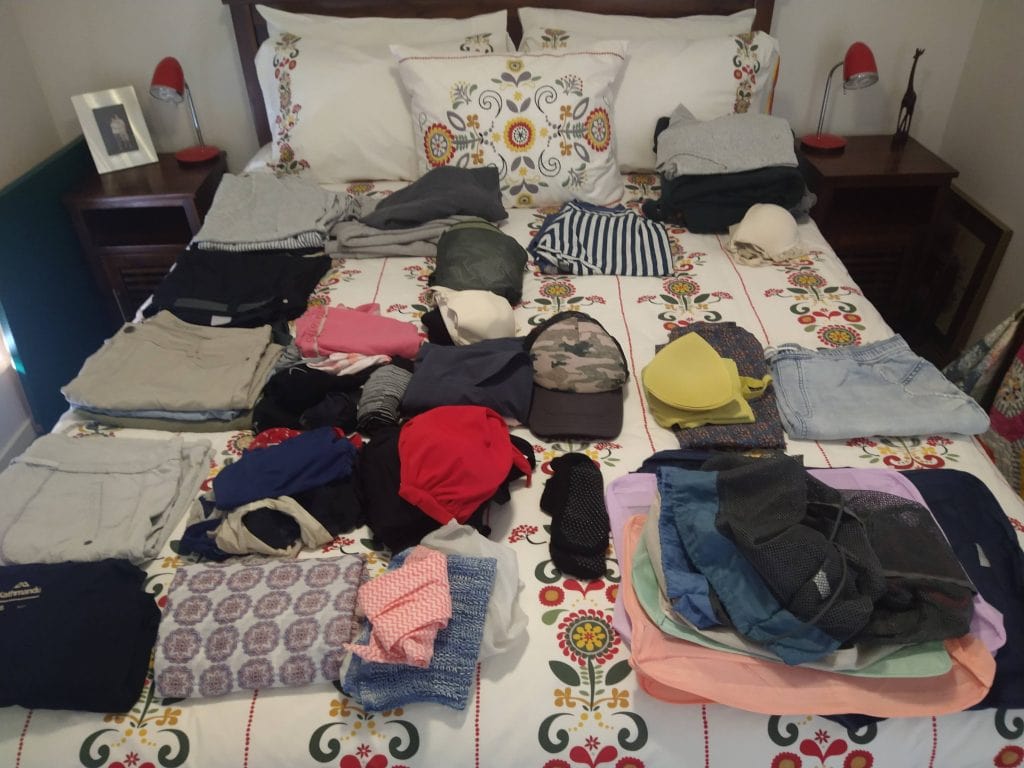
When it comes to long-term travel packing, clothing is where most people overpack.
We’ve done it ourselves: too many outfits, too many “just in case” pieces, and items that barely saw the light of day.
The solution isn’t to pack less randomly, it’s to pack smarter.
That’s where a capsule wardrobe for travel comes in.
What Is a Capsule Wardrobe (And Why It Works for Travel)?
A capsule wardrobe is a small collection of clothing that:
- Mixes and matches easily
- Covers multiple situations
- Reduces decision fatigue
Instead of packing 20 different outfits, you pack fewer pieces that can create dozens of combinations.
More variety through combinations, not volume.
How to Create More Outfits with Less Clothing
This is where neutral colours and versatility really matter.
We typically stick to:
- Neutral base colours (black, khaki, beige, navy – we avoid light colours such as white as they tend to get discoloured if not separated well)
- A few accent pieces for variety
- Simple, interchangeable styles
For example:
- One pair of shorts can work with multiple tops
- A dress can be casual or dressed up
- Layers can completely change an outfit
The goal is flexibility, not fashion perfection.
The Importance of Multi-Purpose Clothing
Some items earn their place in your bag because they do more than one job.
A few examples we rely on:
- Scarf → warmth, modesty cover, beach towel, travel blanket
- Dress → daywear + evening option
- Lightweight jacket → layering across climates
- Windproof Rain Jacket → for wet weather and also for layering in colder climates
These pieces help you stay prepared without adding bulk.
Footwear Strategy (The Most Overlooked Packing Decision)
If there’s one area where people consistently overpack it’s shoes.
We’ve learned this the hard way.
Now, we stick to a simple rule: 3 pairs of shoes each
Typically:
- Comfortable trainers (with our orthotics) for long days of walking
- Casual everyday footwear e.g. travel sandals
- Thongs for the beach, pool or wearing inside on hard floors
Why this works:
- Covers most situations
- Keeps weight manageable
- Avoids unnecessary duplication
Overpacking shoes is one of the fastest ways to make your bag heavy and awkward to move.
Keep It Minimal, But Realistic
This is where we differ slightly from ultra-minimalist advice.
Yes, we keep our wardrobe relatively small, but we don’t strip it back to the point of discomfort and having to wash every 2-3 days.
We still:
- Bring clothes we actually enjoy wearing
- Prioritise comfort for long days of travel
- Adjust based on our travel style and destinations
Because in long-term travel, your clothing isn’t just for photos, it’s for everyday life.
The Packing System We Actually Use (Step-by-Step)
Once you’ve decided what to pack, the next step is just as important — how you pack it.
Over the years, we’ve refined a simple system that keeps everything organised, easy to access, and stress-free when moving between destinations.
It’s simple, but it works.
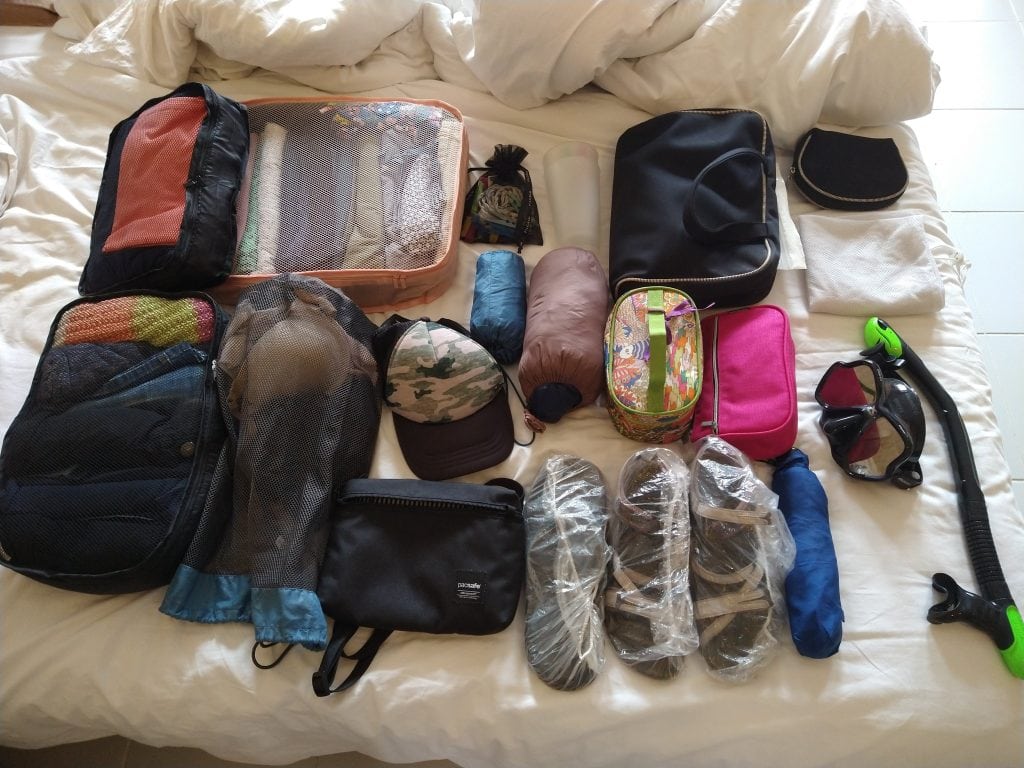
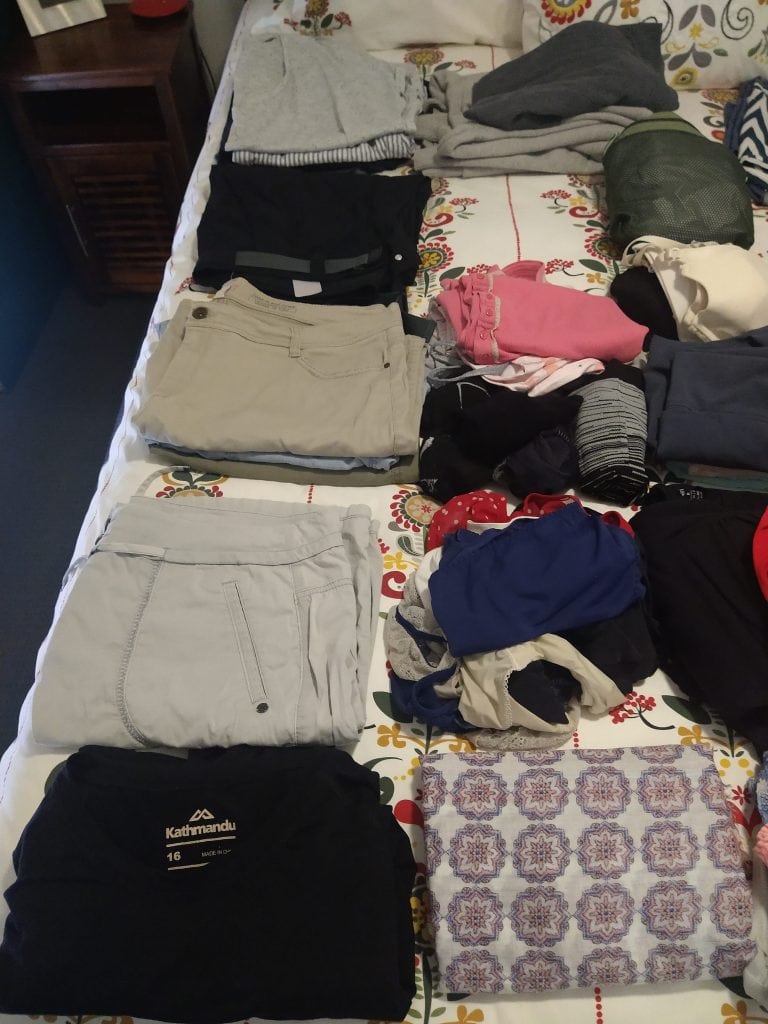
Step 1: Lay Everything Out & Edit Ruthlessly
Before anything goes into your bag, lay it all out in one place.
This is where most people realise they’ve packed too much.
We always do a quick edit by asking:
- Do I actually wear / use this regularly?
- Does this match most of my other clothes i.e. tops and bottoms?
- Is this a “just in case” item?
- Can this be replaced easily if needed?
If in doubt, take it out. The biggest packing mistakes usually happen at this stage, not in the suitcase.
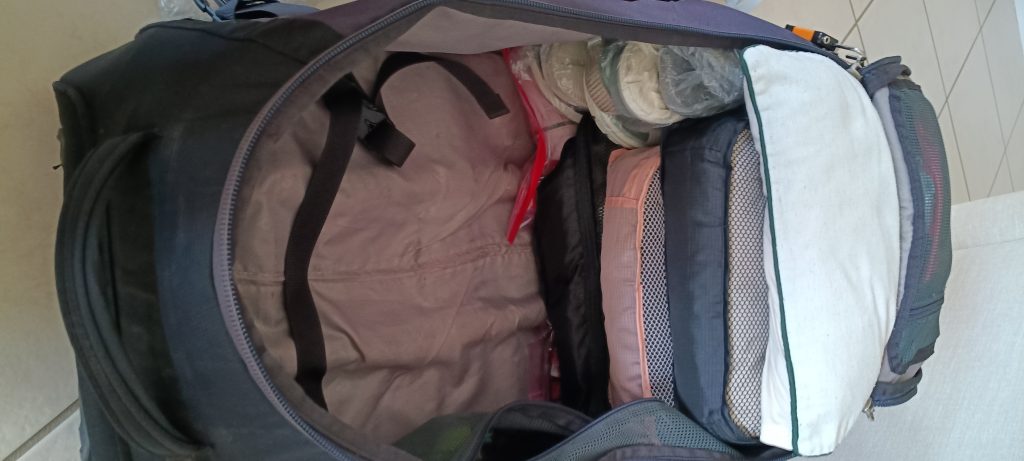
Step 2: Organise with Packing Cubes
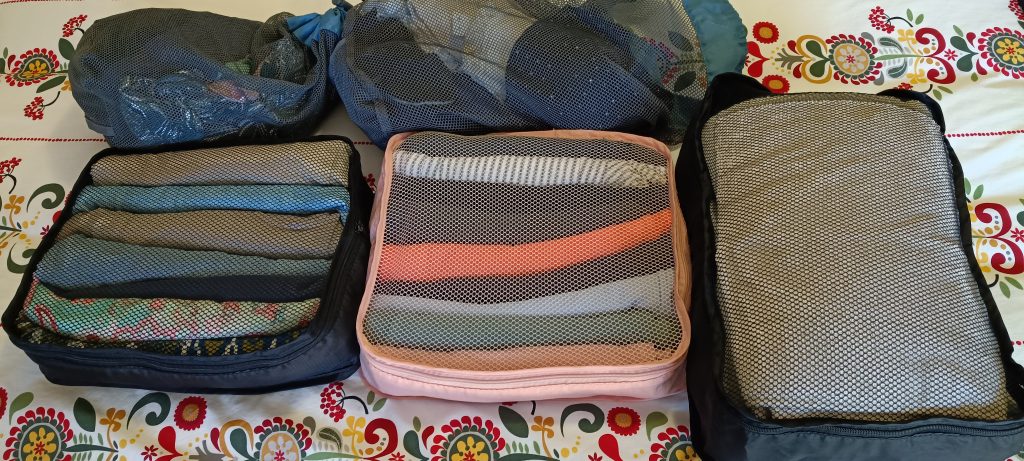
Packing cubes have been one of the best upgrades to our travel system.
We use them to:
- Separate clothing by category (tops, bottoms, underwear)
- Keep everything compact and easy to find
- Avoid unpacking everything at each stop
We also use soft stuff bags for certain items, which adds flexibility.
Organisation matters more than squeezing everything in.
Step 3: Rolling vs Folding (When to Use Each)
There’s a lot of debate around rolling vs. folding, but we use a mix of both.
- Rolling works well for:
- T-shirts
- Casual wear
- Lightweight items
- Folding works better for:
- Structured clothing
- Items you want to keep wrinkle-free
The goal isn’t perfection, but practicality and accessibility.
Step 4: Separate Tech & Essentials
One thing many packing guides underestimate is how much space tech takes.
For us, tech is a major consideration, which is why we:
- Keep all tech gear in our carry-on bags
- Separate it from clothing completely
- Prioritise easy access during travel days
This also gives us peace of mind as our most important items are always with us.
Step 5: Weight Management Without Stress
One of the biggest advantages of our system is that we never worry about weight limits.
By sticking to:
- A consistent packing setup
- A manageable clothing system
- No unnecessary extras
We’ve found a natural balance where:
- Our checked bags stay around 17–18kg
- Our carry-ons hold essentials and tech
- We’re never scrambling at the airport
Consistency is what removes stress, not constant repacking.
Step 6: Focus on Accessibility, Not Just Space
It’s not just about fitting everything in, it’s about being able to find and use your items easily.
We have found packing cubes to be great for this as we can pull out only the relevant cubes upon arrival and they store well on shelves and in drawers.
We pack in a way that:
- Minimises digging through bags
- Keeps frequently used items accessible
- Allows quick repacking between destinations
Because when you’re travelling long-term, you’ll be packing and unpacking a lot.
Adjusting Your Packing for Different Travel Styles
One of the biggest mistakes people make when learning how to pack for long-term travel is assuming there’s a one-size-fits-all packing list.
There isn’t.
Your packing should always reflect how you travel, not just where you’re going.
Slow Travel vs. Fast Travel
Your travel pace has a huge impact on what, and how you pack.
Slow travel (our approach):
- Stay longer in each destination
- Easier access to laundry
- More flexibility to settle into routines
- Less need to pack for constant movement
Fast travel (frequent moving):
- More frequent packing / unpacking
- Greater need for efficiency and lighter bags
- Less tolerance for “extra” items
We prioritise slow travel in our lifestyle as it gives us more flexibility, but it can also tempt you to pack more than you need.
Activity-Based Packing
Your planned activities should influence your packing decisions.
Ask yourself:
- Snorkelling or swimming often?
- Will you be hiking regularly?
- Spending time in cities vs. nature?
Certain activities require specific gear, but the key is to:
- Only pack what you’ll realistically use
- Avoid overpacking “just in case” equipment
For example, for the first 8 years of our travels, we packed and travelled with our favourite diving masks and snorkels as we had planned many of our destinations around snorkelling. This year, we knew we would not be travelling to any areas known for their snorkelling, so we decided to leave them in Australia.
We always tailor our packing based on the type of trip, not just the destination.
Carry-On Only vs. Checked Bag
This is one of the most debated topics in retired nomad travel, and where we take a slightly different stance from many travel vlogs and blogs.
Carry-on only:
- Maximum mobility
- No waiting at baggage claim
- Lower risk of lost luggage
Checked bag + carry-on (our approach):
- More comfort and flexibility
- Space for long-term essentials
- Less restriction on liquids and gear
We’ve always travelled with:
- 1 checked hybrid suitcase (17–18kg) – this is the weight we can both comfortably carry when in transit
- 1 carry-on bag for our tech and essentials
And in over 8+ years of travel, we’ve only had our luggage delayed once because they missed a tight connection, and they were returned within 24 hours.
For us, the added comfort outweighs the minimal risk.
Adjusting for Climate and Regions
Long-term travel often means moving between different climates and cultures.
We always aim to pack for:
- Layering rather than bulky items
- Adaptability across climates
- Cultural appropriateness (especially in more conservative regions)
This reduces the need to constantly buy new clothing along the way.
Matching Your Packing to Your Lifestyle
Ultimately, your packing should reflect how you want to live while travelling.
Ask yourself:
- Do I prioritise comfort or minimalism?
- Do I want flexibility or strict limits?
- Am I travelling for experiences, relaxation, or adventure?
Your answers will shape your packing far more than any checklist ever will.
A Simple Long-Term Travel Packing List (Summary)
By this point, you’ve got the mindset and system, now let’s bring it all together with a simple, practical packing list for long-term travel.
This isn’t meant to be exhaustive. Instead, think of it as a starting point you can adapt based on your travel style, climate, and personal preferences.
If you are interested in exactly what we travel with, we cover this in detail in our full long-term travel packing list guide.
Clothing Essentials
Stick to your capsule wardrobe approach:
- 5–7 tops (mix of short and long sleeve)
- 3–5 bottoms (shorts, trousers, skirts)
- 1–2 versatile outfits (dress, jumpsuit)
- 1 lightweight jacket or layer
- Underwear (10–12 pairs)
- Socks (3–5 pairs)
- Sleepwear
- Swimwear
Focus on mix-and-match combinations, not quantity.
Footwear
Keep it simple and practical:
- Comfortable walking shoes
- Casual everyday shoes (sandals or trainers)
- One additional pair (dressier or activity-specific)
3 pairs is usually more than enough.
Toiletries & Personal Items
- Basic toiletries (travel-sized where possible)
- Skincare and sunblock (your preferred brands)
- Medications and vitamins
- Minimal grooming items
Bring what you know works for you, especially for long-term travel.
Tech Gear
This is often the biggest space consideration:
- Laptop / tablet
- Phone and chargers
- Camera (if needed)
- Power bank
- Universal adapter
Keep tech organised and always in your carry-on.
Travel Essentials
- Passport and important documents
- Travel insurance details
- Wallet / cards / backup payment options
- Daypack or small bag
Optional Comfort Items (Your Personal Choice)
This is where your packing becomes more personal, and where we differ slightly from strict minimalist advice.
Examples:
- Travel pillow
- Small kitchen essentials (knife, peeler, bag sealing clips)
- Favourite personal care products
If it improves your daily life and you use it regularly, it can be worth bringing.
What NOT To Pack for Long-Term Travel (Quick Overview)
Sometimes knowing what NOT to pack is even more important than knowing what to bring.
Most overpacking issues come down to a few common habits and once you recognise them, they’re easy to avoid.
Too Many Clothes
We’ve all done it.
Packing extra outfits feels like a safety net, but in reality:
- You’ll rotate the same favourites
- Many items will go unworn
- Your bag becomes heavier and harder to manage
More clothes ≠ more options.
“Just in Case” Items
This is the biggest packing trap.
These are the items you might need… but probably won’t.
Examples:
- Extra shoes
- Backup outfits
- Random gear for unlikely scenarios
If it’s not part of your regular routine, leave it behind.
Heavy and Bulky Gear
Bulky items quickly take over your luggage.
This includes:
- Thick clothing instead of layers
- Large or specialised gear
- Items that don’t pack down well
Always prioritise lightweight and compact alternatives.
Duplicate Items
Packing multiples “just to be safe” adds unnecessary weight.
Common examples:
- Too many similar clothing items
- Multiple versions of the same product
- Backup items you’ll never use
Keep it simple — one good item is enough.
Things You Can Easily Buy Anywhere
One of the biggest mindset shifts in long-term travel is realising: You don’t need to bring everything with you
Avoid packing items you can:
- Buy cheaply at your destination
- Replace easily if needed
This gives you more flexibility and reduces packing stress.
Your Packing Will Evolve (And That’s a Good Thing)
If there’s one thing we’ve learned after 8+ years of full-time travel, it’s this: There is no perfect packing list.
And that’s completely normal.
Your First Packing List Won’t Be Your Last
When you first start long-term travel, it’s natural to:
- Overpack
- Bring items you never use
- Forget things you actually need
We’ve done all of that.
Over time, you’ll start to notice patterns:
- What you wear most
- What stays untouched in your bag
- What you wish you had brought
That’s how your packing system improves. Not before you leave, but while you travel.
Learning Through Experience
Long-term travel teaches you lots of lessons quickly.
You’ll refine your packing by:
- Removing items you don’t use
- Replacing things with better alternatives
- Adjusting based on destinations and travel style
We’ve gradually shaped our packing over 8+ years into something that works consistently for us.
But even now, it still evolves.
The “1 In, 1 Out” Rule
One of the simplest ways we keep our packing under control is: 1 item in = 1 item out
If we buy something new while travelling, something else has to go.
This helps:
- Keep our luggage size consistent
- Prevent gradual overpacking
- Encourage thoughtful decisions about what we carry
Embrace Flexibility
Your packing doesn’t need to be perfect. It just needs to be functional.
Give yourself permission to:
- Adjust as you go
- Make mistakes
- Try different approaches
Because long-term travel is about learning what works for you, not following rigid rules.
FAQs: Packing Tips For Long-Term Travel
Now that you have read how we suggest packing for travelling long-term, you might still have a few questions. Don’t worry, we’ve got you covered! Here are some frequently asked questions about how to pack for extended travel.
How many clothes do I need for long-term travel?
For long-term travel, you only need enough clothing for 1–2 weeks. The key is to plan for regular laundry rather than packing for the full duration of your trip. Focus on versatile, mix-and-match items that you can wear multiple times in different combinations.
What is the best way to pack for long-term travel?
The best way to pack for long-term travel is to follow a simple system:
* Pack for a short laundry cycle (1–2 weeks)
* Choose versatile, multi-purpose clothing
* Use packing cubes for organisation
* Prioritise lightweight, quick-dry fabrics
This approach helps you stay organised, mobile, and comfortable over time.
How do I pack light for long-term travel?
To pack light for long-term travel:
* Avoid “just in case” items
* Limit yourself to essential clothing and gear
* Choose items you can use in multiple ways
* Stick to a capsule wardrobe
Packing light isn’t about sacrificing comfort, it’s about packing smarter.
What luggage is best for long-term travel?
The best luggage for long-term travel depends on your travel style.
* Carry-on only works well for maximum mobility
* Checked bag + carry-on offers more comfort and flexibility
We personally use a hybrid suitcase (17–18kg) plus a carry-on for tech and essentials, which provides a good balance between mobility and comfort.
Can you travel long-term with carry-on only?
Yes, it’s 100% possible to travel long-term with carry-on only, but it’s not suitable for everyone. While it offers maximum mobility, it can limit comfort and flexibility, especially for long-term travellers who want routine and personal items. Many travellers prefer a balanced approach with both checked luggage and a carry-on.
What should I not pack for long-term travel?
Avoid packing:
* Too many clothes
* “Just in case” items
* Heavy or bulky gear
* Duplicate items
If something can be easily bought at your destination, it’s usually better to leave it behind.
How do I choose clothes for long-term travel?
Choose clothing that is:
* Versatile and easy to mix and match
* Comfortable for everyday wear
* Suitable for multiple climates
* Made from lightweight, breathable, and quick-dry fabrics
This allows you to pack fewer items while still having plenty of outfit options.
How do I avoid overpacking for long-term travel?
To avoid overpacking:
* Pack for 1–2 weeks only
* Lay everything out before packing and remove excess
* Stick to a packing system
* Focus on what you actually use regularly
A simple rule to follow is: if in doubt, leave it out.
In Summary: How to Pack For Long-Term Travel
Packing for long-term travel can feel overwhelming at first, but it doesn’t have to be.
After years on the road, we’ve found that the key isn’t packing perfectly, it’s packing practically.
Focus on:
- A simple, repeatable system
- Versatile, functional items
- A balance between mobility and comfort
And most importantly: Pack for the life you’ll live, not the one you’re imagining.
Because long-term travel isn’t just about moving from place to place, it’s about creating a lifestyle that feels sustainable, comfortable, and enjoyable over time.
Start with the basics, refine as you go, and trust that your system will improve with experience.
Are you planning a nomadic life or are you currently a nomad? Have we missed anything we should add to this packing for long-term travel guide or do you still have questions? Feel free to contact us on Facebook or via email and let us know.
Recommended Nomad Tools Guides
In these guides we share the gear, technology, and travel tools we personally use and recommend for long-term travel.
Packing & Travel Essentials
Travel Gear Reviews
- Best Retractable Cable Lock for Travellers: Pacsafe Review
- Pacsafe Portable Travel Safe: Pacsafe Travelsafe Review
- Ably Apparel Review: Is It Worth the Price for Travellers?
- The North Face Borealis Classic Backpack: Best for Travel?
- Mares X-Vision Review: Why I Love This Dive Mask
- Mares Ergo Dry Snorkel Review: Is It Worth the Hype?
Digital Travel Tool Guides
- 9 Best Travel Planning Apps Every Traveller Should Know
- Free Airport WiFi Passwords: Stay Connected Worldwide
Travel Gift Guides
Our Favourite Travel Resources & Booking Platforms
DISCLAIMER: This article contains affiliate links and Nomadic Retirement Travel are a participant in the Amazon Services LLC Associates Program. That means if you click a link and make a purchase, we make a small commission at no extra cost to you. Please see our disclosure policy for more information.
