

Can You Afford to Travel Full Time? Real Costs, Budget & Lifestyle Breakdown

Can you afford to travel full time? See real costs, budgets, and how to make long-term travel financially possible and work for your lifestyle.
One of the questions we get asked the most is simple on the surface: Can you actually afford to travel full time?
It’s one of the most common questions we get and it usually comes with the assumption that you either need a lot of money, or you have to live very cheaply to make it work.
We used to think the same.
Before 2018, travel for us meant short trips, packed schedules, and spending more in a couple of weeks than we normally would at home. It always felt separate from real life.
That changed when we started travelling full-time.
Instead of adding travel on top of our lifestyle, we replaced our lifestyle with it.
Since then, we’ve visited over 80 countries, averaging around $4,500 AUD per month as a couple across the year. Some months are closer to $2,500 in Southeast Asia, while others in Europe are higher.
What we realised is simple: Full-time travel isn’t about spending less, it’s about spending differently.
And when you look at it that way, it becomes much more achievable than most people think.
Key Takeaways: Can You Afford To Travel Full-Time?
- Full-time travel replaces your current living costs, it doesn’t add new ones
- Where you live matters more than how much you earn
- Many people can already afford it, they’re just spending differently
- Slowing down is what makes travel sustainable long term
- Your biggest decision is what you do with your home
- This isn’t just about money, it’s about how you want to live
What Does Full-Time Travel Actually Cost?
Before we get into the numbers, it helps to understand that full-time travel isn’t one fixed cost. It depends entirely on how and where you choose to live.
A Realistic Monthly Budget (Not Backpacking)
One of the biggest misconceptions about full-time travel is that you either need a huge budget or you have to live like a backpacker.
In reality, there’s a wide middle ground, and that’s where we sit.
Over the course of a full year, our travel budget averages around $4,500 AUD per month as a couple. That includes everything i.e. accommodation, food, transport, activities, and insurance, while travelling comfortably.
But that number shifts depending on where we are.
In Southeast Asia, we’ve lived well on $2,500 AUD per month, renting apartments, eating out regularly, and still doing activities. In Europe, costs can climb significantly, especially with accommodation, where short-term stays can easily reach $120+ AUD per night.
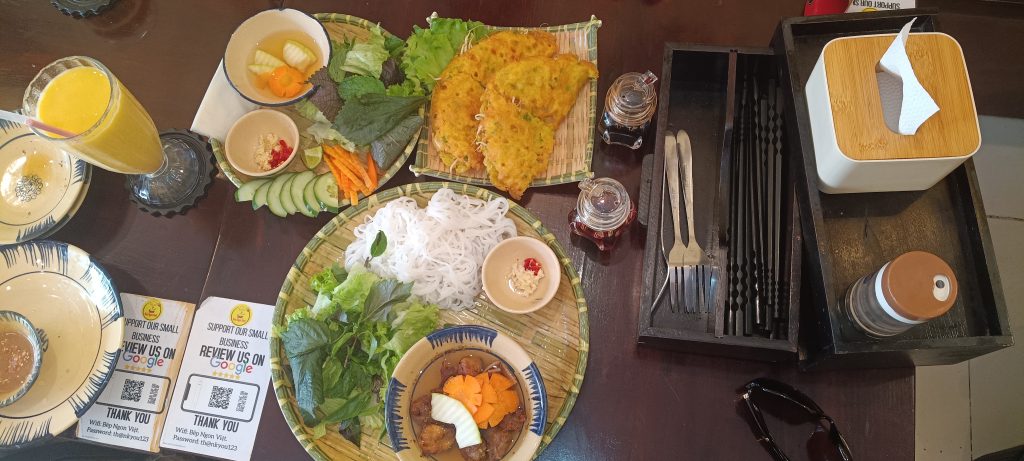
Food shows a similar contrast. In places like Da Nang, Vietnam, we can have a local meal for around $5 AUD, with a beer at about $1.50 AUD. However, in parts of Europe, that same experience might be closer to $20 AUD for a meal and $7 AUD for a drink.
Accommodation is usually the biggest variable. Monthly rentals in lower-cost regions can sit between $500–$1,000 AUD, while higher-cost destinations quickly push daily rates up if you’re not staying longer.
We also budget for:
- Activities and experiences each month
- Travel insurance for both of us
- Ongoing transport between destinations
The key point is this: this isn’t extreme budget travel. We’re not cutting everything back or sacrificing comfort.
We’re simply choosing where we spend and where we don’t.
What That Budget Includes
When you look at your travel budget properly, it covers the same categories you already pay for at home:
- Accommodation
- Food
- Transport
- Insurance
- Daily living costs
- Experiences
You’re not adding a whole new layer of expense. You’re replacing your existing lifestyle costs with a different version of them. And once you start looking at it this way, the numbers begin to make a lot more sense.
Travel vs Normal Life at Home (The Eye-Opening Comparison)
To understand whether full-time travel is affordable, you need to compare it directly with what your everyday life already costs.
The Shift From ‘Vacation Travel’ to ‘Lifestyle Travel’
The biggest mindset shift is understanding that full-time travel is not the same as going on holiday.
When you travel for a couple of weeks, you tend to:
- Stay in hotels
- Eat out for every meal
- Book tours and activities back-to-back
It’s short-term, fast-paced, and often expensive.
But long-term travel works differently.
You rent apartments instead of hotels. You shop locally. You settle into a routine. You are no longer trying to see everything in a few days, instead you’re living there.
And that’s where the cost changes.
Travel becomes cheaper the moment you stop treating it like a holiday.
The True Cost of ‘Normal Life’
Before we started travelling full-time, we never really questioned what our life at home was costing us.
But when you break it down, it adds up quickly.
There’s the obvious:
- Rent or mortgage
- Utilities and ongoing bills
- Car expenses
And then there are the quieter costs:
- Subscriptions you barely use
- Maintenance and repairs
- Everyday spending that becomes automatic
It’s easy to overlook because it’s familiar. It’s just ‘normal life’.
At home, your money goes towards maintaining a life. On the road, it goes towards living one.
What Changes When You Travel Full-Time
When you shift to full-time travel, many of those costs don’t disappear, they change form.
Your accommodation replaces rent. Utilities are often included. There’s no car sitting idle, and far less spending on things you don’t really need.
At the same time, your spending becomes more intentional.
You’re choosing destinations based on cost, lifestyle and timing.
So while your overall spend might not drop dramatically, the way you use your money shifts completely.
You don’t necessarily spend less. You spend differently.
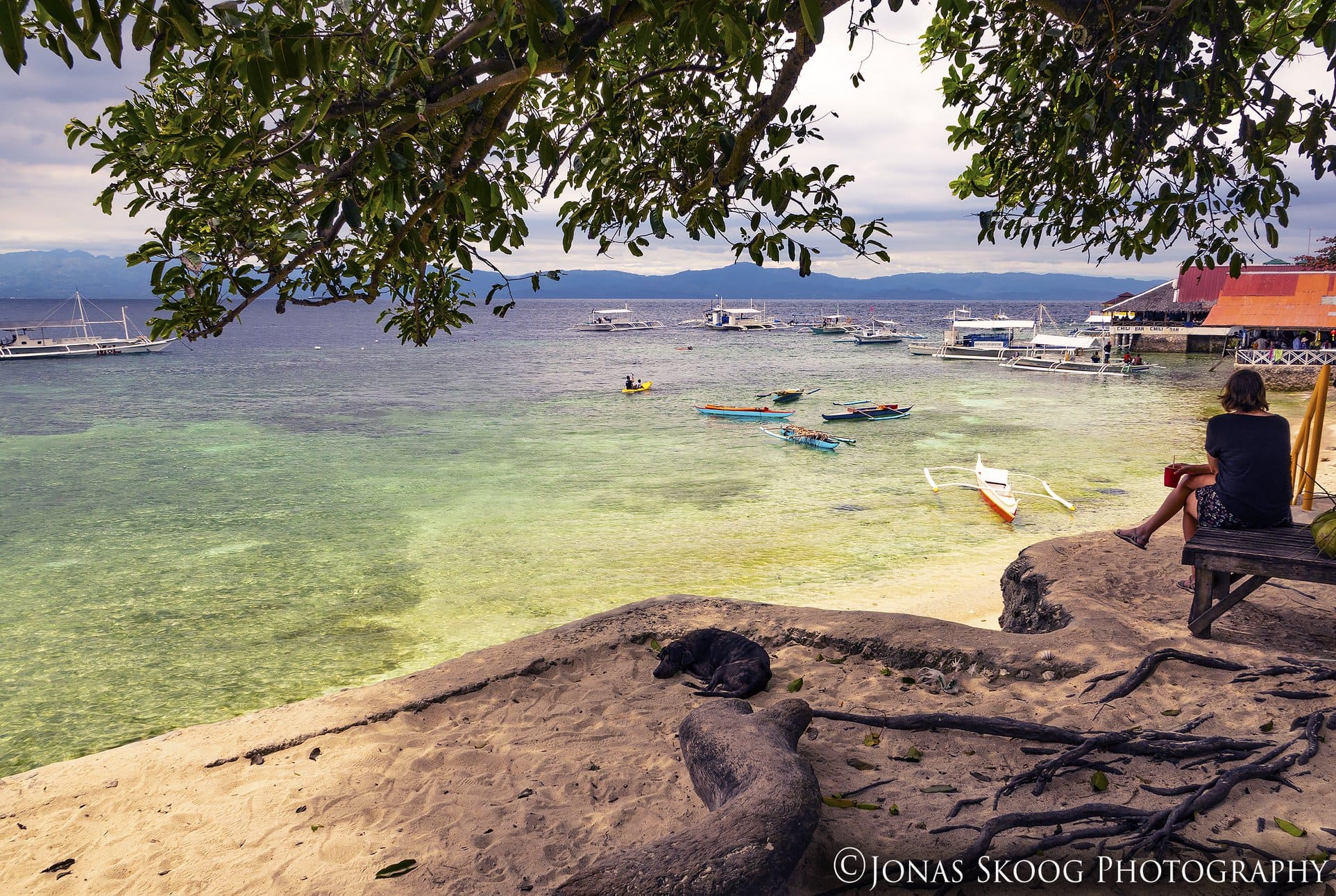
Why Most People Think They Can’t Afford Full-Time Travel (And Why That’s Often Wrong)
The biggest barrier isn’t always money, it’s how we think about money and travel.
Most people assume full-time travel is out of reach before they’ve ever looked at the numbers properly.
That assumption usually comes from how we’ve all experienced travel in the past.
We compare it to holidays. Short, expensive trips where everything is compressed into a limited time. Flights are booked last minute, accommodation is priced per night, and spending feels higher because it’s temporary.
So it’s easy to conclude: ‘I can’t afford to do this all the time.’
But that comparison doesn’t hold up.
Full-time travel is not a permanent holiday. It’s a different way of living.
Another common assumption is that staying at home is the cheaper option. Because those costs are familiar, they feel manageable. Rent or a mortgage, bills, car expenses, subscriptions — it all blends into the background.
You don’t question it. You just keep paying it.
It’s only when you step back and compare the total cost of that lifestyle to a travel-based one that things start to shift.
There’s also a sense of financial risk that holds people back. Letting go of a home, reducing possessions, or relying on investments or savings feels uncertain, even if the numbers support it.
We felt that too before we left.
But what we found is this: The problem wasn’t that full-time travel was too expensive. It was that we had never properly compared it to what we were already spending.
And once we did, it became a lot more realistic than we expected.
Is Full-Time Travel Expensive?
The honest answer is: it depends on how you choose to travel.
Full-time travel can be expensive if you approach it like a continuous holiday. Fast travel, short stays, and high-cost destinations will push your budget up quickly.
But that’s not how long-term travel typically works.
When you slow down, stay longer, and choose your destinations with some thought, the costs start to level out. In many cases, they can be comparable to, or even lower than, what you’d spend living at home.
There isn’t one fixed cost. Your budget depends on your pace, your locations, and how you choose to live.
At the lower end, travellers staying in cheaper regions and keeping things simple can spend far less than a typical cost of living back home.
In the middle, which is where we sit, you can travel comfortably, rent apartments, eat well, and still keep your spending around what many people already spend each month.
At the higher end, if you focus mainly on expensive countries or move around frequently, costs can climb quickly.
So the better way to think about it is this: full-time travel becomes expensive. or affordable, based on the decisions you make along the way.
It becomes expensive, or affordable, based on the decisions you make along the way.
Why Travel Feels More Valuable for the Same Money
Once you compare the numbers, the next realisation is not just about cost, it’s about what your money actually gives you.
At home, most of your spending goes towards maintaining a lifestyle. Housing, bills, routines, and everyday expenses take up the majority of your budget. Over time, it can start to feel repetitive i.e. same environment, same patterns, different day.
When you travel full time, those same dollars are used differently.
Your accommodation might still be one of your biggest costs, but now it could be an apartment in a new country. Your daily spending goes towards meals, local experiences, and getting to know a place rather than simply moving through a routine.
There’s also a shift in how you experience time.
Without the usual structure of workweeks and limited annual leave, your days feel more open. You’re not trying to fit everything into a short window, which changes how you spend, plan, and prioritise.
For us, this has been one of the biggest differences. We’re not necessarily spending less overall, but what we get in return feels far greater.
That’s where the difference becomes clear.
It’s not about cutting costs. It’s about using the same money to create a lifestyle that feels more aligned with how you actually want to live.

The 3 Things That Make Full-Time Travel Affordable
There isn’t one fixed cost for full-time travel! The reality is, you have more control over it than you might think.
1. Travel Style
One of the biggest misconceptions is that full-time travel means cutting everything back.
That hasn’t been our experience.
We don’t stay in hostels or travel at the extreme budget end. Instead, we rent apartments, aim for comfort, cook some meals ourselves, and choose a style that feels sustainable long term.
The key is not to travel as cheaply as possible, but to travel in a way you can maintain.
We’ve found that mixing destinations works well. Spending time in lower-cost countries helps balance out periods in more expensive places, without feeling like you’re constantly restricting yourself.
It’s less about being ‘cheap’ and more about being intentional.
2. Geo-Arbitrage (The Real Game Changer)
This is where the numbers can shift the most.
Living in places where the cost of living is lower allows your money to go much further, without necessarily changing your lifestyle.
We’ve spent extended time in countries like Thailand and Vietnam, where comfortable monthly living costs can be a fraction of what you’d pay in Australia or Europe.
Accommodation, food, and day-to-day expenses all come down significantly.
Compare that to higher-cost destinations, where short stays and daily rates can increase your spending quickly, and the difference becomes clear.
The biggest savings don’t usually come from cutting back harder. They come from choosing where you are. And this is how geoarbitrage helps reduce your cost of living while travelling.
3. Slow Travel
Slowing down has had the biggest impact on both our costs and our overall experience.
Staying in one place for longer means:
- Lower accommodation rates
- Fewer transport costs
- A more settled routine
Instead of constantly moving, you start to live more like a local.
You find regular places to eat, understand the area better, and avoid the constant cycle of planning and moving on.
It also reduces the pressure to spend.
When you’re not trying to fit everything into a few days, you naturally become more selective with what you do.
For us, slow travel isn’t just a preference. It’s one of the main reasons full-time travel works financially.

Why Slow Travel Changes Everything
If there’s one factor that has the biggest impact on both cost and quality of life, it’s how fast you move.
Faster Travel = Higher Costs
When you move quickly, everything becomes more expensive.
Short stays mean paying nightly rates instead of monthly discounts. You’re booking more transport, often at short notice. There’s also a tendency to do more in less time, which naturally increases spending.
It also adds a layer of pressure.
You feel like you need to make the most of each destination, which often leads to more tours, more meals out, and more constant decision-making.
Over time, that pace can become both costly and tiring.
Slower Travel = Lower Costs + Better Lifestyle
When you slow down, the dynamic shifts.
Staying in one place for a month or longer often reduces accommodation costs significantly. You’re not constantly paying for flights or moving between cities, and your daily routine becomes more stable.
You start to find a rhythm.
Simple things like shopping locally, cooking occasionally, or returning to the same café become part of your day. Spending becomes less reactive and more intentional.
It also changes how the experience feels.
You’re no longer passing through, you’re settling in, even if it’s temporary.
For us, slow travel has played a big role in keeping costs down, and made our full-time travels far more enjoyable.
The slower you travel, the more sustainable it becomes, financially and personally.
Travel Isn’t Cheaper… Unless You Do This
Full-time travel can cost more than living at home, but only if you approach it the wrong way.
When Travel Can Be Expensive
If you move quickly, stay in hotels, and focus only on higher-cost countries, your expenses will add up fast.
Short stays lock you into nightly rates. Constant flights increase your transport costs. And being in places where everything is priced higher means your day-to-day spending rises without much effort.
This is where many people get their idea of travel being expensive, from short trips that follow this exact pattern.
And if you tried to sustain that long term, it would be.
When Travel Becomes Affordable
The shift happens when you become more deliberate with how you travel.
Staying longer in each destination brings accommodation costs down. Mixing lower-cost countries with more expensive ones helps balance your overall spend. Being selective about where and how you spend naturally keeps things under control.
Over time, you start to think about travel less like a series of trips, and more like a system.
One way we look at it is like a portfolio.
Some destinations cost more, others cost less, and together they balance out across the year. A few months in Southeast Asia can offset time spent in Europe, without needing to compromise your overall lifestyle.
That balance is what makes full-time travel sustainable.
The Biggest Decision: What Happens to Your Home?
For most people, this is the single biggest factor that determines whether full-time travel works financially.
What you do with your home can completely change your cost base.
Some people choose to keep their property and rent it out, creating an income stream while they travel. Others prefer to keep a home base they can return to, even if it means carrying some ongoing costs.
For us, we took a different path.
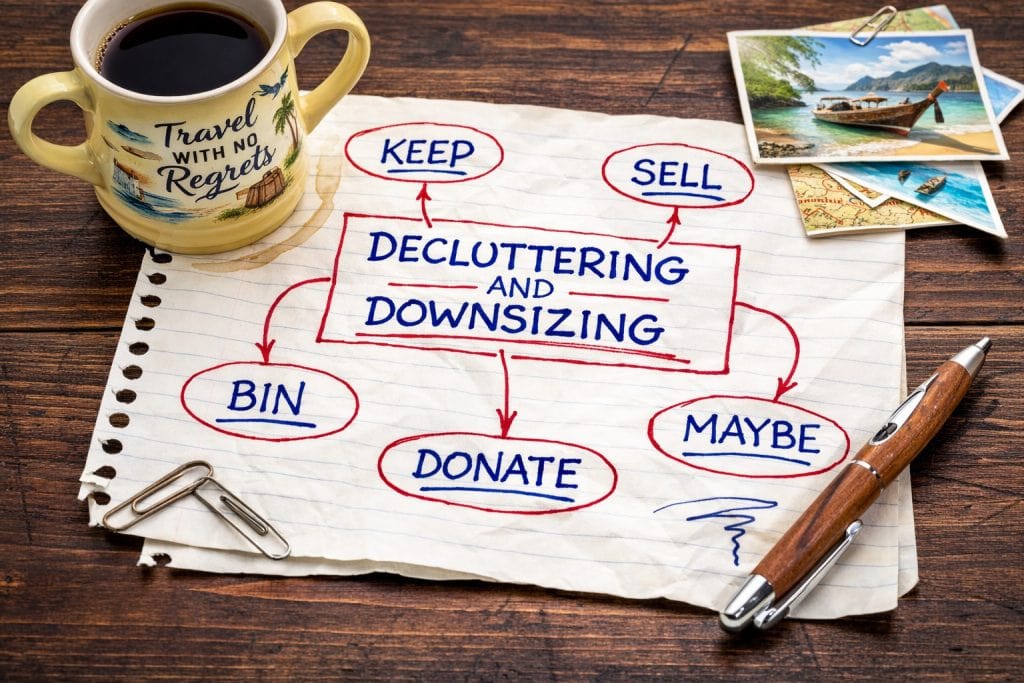
We decided to sell everything — our house, cars, and most of our belongings — and invest that money into shares and income-generating assets. That shift gave us flexibility and removed the ongoing costs tied to maintaining a home in Australia.
It also meant we weren’t trying to fund two lifestyles at once.
That’s often where full-time travel becomes difficult i.e. when you’re paying for life on the road while still carrying the full cost of life at home.
Moving from being asset-heavy to having more liquid, flexible investments made a significant difference for us.
There’s no single right approach here.
But this decision to consider before committing to full-time travel will likely have the biggest impact on whether long-term travel feels financially sustainable or constantly stretched.
The Real Problem Isn’t Income — It’s Your Cost Base
For many people, the issue isn’t how much they earn, it’s where and how they’re spending it.
It’s easy to assume that nomadic retirement travel requires a higher income.
But what we’ve seen, and experienced ourselves, is that even a good income doesn’t always create freedom if your cost of living is high.
Living in countries like Australia, the baseline cost of everyday life is already significant. Housing, transport, food, and general expenses can quickly absorb most of what you earn.
We knew that if we stayed and retired, our money would largely go towards maintaining that lifestyle, and we questioned what kind of quality of life that would actually give us long term.
When you change location, that equation shifts.
Your income or savings doesn’t necessarily need to increase. Instead, your spending environment changes, and with it, what your money can actually do for you.
That’s where full-time travel becomes a realistic option.
Can You Afford to Travel Full Time? (Simple Cost Comparison)
The easiest way to answer this question is to compare what you already spend with what you could spend while travelling.
Start with your current monthly cost of living.
Include everything:
- Housing (rent or mortgage)
- Utilities and bills
- Food
- Transport
- Insurance
- Subscriptions and general spending
Most people underestimate this number until they write it down properly.
Then compare it to a realistic travel budget.
Using our experience as a guide, a comfortable full-time travel lifestyle can sit around $4,500 AUD per month as a couple, with the flexibility to go lower in cheaper regions or higher in more expensive ones.
Now look at the difference.
Are you already close to that number?
If you are, then it’s not a question of whether you can afford to travel full time.
It’s a question of whether you’re willing to redirect your spending.
This is where things usually click.
Most people already have the budget, they’re just using it to support a different kind of lifestyle.
The Trade-Offs
Full-time travel isn’t about adding something new to your life, it’s about replacing what you already have.
There are real trade-offs to living a nomadic lifestyle, and it’s important to be honest about them.
Letting go of possessions is one of the first shifts. Selling or storing your belongings sounds simple in theory, but it forces you to rethink what you actually need day to day.
There’s also the idea of ‘home’.
Without a fixed base, you lose a sense of familiarity and routine. You’re constantly adapting to new environments, which can feel exciting at times and tiring at others.
Routines change as well.
Simple things like having a regular gym, a favourite café, or a consistent schedule become less predictable. You have to be comfortable creating new routines wherever you are.
And then there are the small comforts – your own space, your own setup, the ease of everything being familiar.
You don’t realise how much you rely on those things until they’re no longer there.
But at the same time, something else replaces them.
A different kind of freedom. A different way of living.
FAQs: Can You Afford to Travel Long-Term?
Now that you have assessed the affordability of full-time travel, you might still have a few questions. Don’t worry, we’ve got you covered! Here are some frequently asked questions about the costs of a full-time travel lifestyle.
Can you really afford to travel full time?
Yes, many people can once they compare it to what they already spend living at home. Full-time travel often replaces existing costs rather than adding new ones.
How much does it cost to travel full time?
Costs vary depending on your travel style and location. From our experience, a comfortable lifestyle can average around $4,500 AUD per month as a couple, with lower costs in regions like Southeast Asia and higher costs in Europe.
Is full-time travel expensive?
It can be, but only if you travel like you’re on a constant holiday. Slowing down, staying longer, and choosing destinations carefully can make it comparable to everyday living costs.
Can I afford to travel long term on a normal income?
Yes. Many people manage long-term travel on average incomes by adjusting their cost of living, choosing lower-cost destinations, and reducing fixed expenses.
What is the cheapest way to travel full time?
The biggest savings usually come from:
* Staying longer in one place
* Renting apartments instead of hotels
* Travelling in lower-cost countries
It’s less about cutting everything back and more about how you structure your travel.
Do you need to be rich to travel full time?
No. Full-time travel is more about how you manage your expenses and lifestyle than how much you earn.
Is slow travel really cheaper?
Yes. Staying longer reduces accommodation rates, transport costs, and daily spending. It also makes the lifestyle more sustainable over time.
What happens to your home when you travel full time?
This depends on your situation. Some people rent it out, some keep it as a base, and others sell and invest the money. This decision has a major impact on affordability.
In Summary: This Is Bigger Than Money
At some point, this stops being a financial question. It becomes a question of how you want to spend your time, and what you want your life to look like.
When you break it down, full-time travel isn’t reserved for the wealthy. It’s often a reallocation of what you already spend.
The numbers show that:
- Travel can be comparable to living at home
- Income isn’t always the limiting factor
- Your location and pace of travel matter more than most people realise
But beyond the numbers, there’s a bigger shift. You’re choosing what your money is used for.
At home, a large portion goes towards maintaining a lifestyle i.e. housing, bills, and routine expenses that often feel fixed.
On the road, that same money can be directed towards time, flexibility, and experiences.
That doesn’t make one better than the other. But it does make the choice clearer.
For us, it came down to what we valued more.
And once we saw that the numbers could support it, the decision wasn’t really about affordability anymore.
It was about how we wanted to live.
Are you planning a nomadic life or are you currently a nomad? Have we missed anything we should add to this post or do you still have questions? Feel free to contact us on Facebook or via email and let us know.
You Might Also Like
If you’re starting to think full-time travel might be possible, these guides will help you take the next step:
👉 How to Plan Long-Term Travel: Our Step-by-Step System
If you’re wondering how to turn the idea into something practical, this walks you through how we plan a full year of travel.
👉 Our Approach to Slow Travel (And Why It Keeps Costs Down)
Slowing down changed everything for us—not just financially, but how we experience each destination.
👉 How We Use Geoarbitrage to Make Our Money Go Further
One of the biggest factors in affordability isn’t how you travel—it’s where you choose to live.
👉 How to Choose a Travel Destination That Fits Your Budget and Lifestyle
Not every destination works for every traveller. This will help you narrow down your options based on what matters to you.
👉 Is a Full-Time Travel Lifestyle Right for You? What to Consider
Before committing, it’s worth understanding what this lifestyle actually involves day to day.
👉 Or start here:
Our step-by-step roadmap to transitioning into full-time travel
DISCLAIMER: This article contains affiliate links and Nomadic Retirement Travel are a participant in the Amazon Services LLC Associates Program. That means if you click a link and make a purchase, we make a small commission at no extra cost to you. Please see our disclosure policy for more information.
