How To Stay Safe While Travelling: Our Top Long-Term Travel Safety Tips

How to stay safe while travelling with practical tips from full-time travellers. Learn simple habits to protect yourself, your money and valuables.
Travelling the world is one of the most rewarding experiences you can have, but it also comes with risks. After living a full-time nomadic retirement lifestyle since January 2018, we’ve learnt that staying safe isn’t about being constantly worried or expecting the worst. It’s about developing good habits that become second nature wherever you travel.
Over the years we’ve visited destinations ranging from quiet country towns to some of the busiest cities in the world. Along the way we’ve refined our own travel safety systems through experience, a few close calls, and by learning from other travellers.
Today, many of those routines happen automatically, from how we secure our valuables before leaving our accommodation to how we carry our passports, credit cards and emergency cash while exploring a new destination.
One thing we’ve learnt is that long-term travel safety is very different from going away for a two-week holiday. When you’re travelling full-time, your passport, laptop, camera gear, medications, bank cards and important documents aren’t just valuables, they’re your lifestyle. Losing any one of them can quickly turn an enjoyable trip into an expensive and stressful experience.
The good news is that most travel problems can be reduced, or even avoided altogether, with a little planning and a few practical habits. You don’t need expensive security gadgets or to spend your trip looking over your shoulder. You simply need systems that work consistently wherever you travel.
In this guide, we’ll share the travel safety tips and routines we’ve developed after years of travelling full-time. From protecting your money and important documents to choosing safe accommodation, avoiding common travel scams and mistakes, and staying aware while exploring new destinations, these are the habits that help us travel with confidence every day.
How To Stay Safe While Travelling: Key Takeaways
If you’re short on time, here are the main travel safety tips we’ll cover in this guide:
- Prepare before you leave by organising comprehensive travel insurance, researching your destination and choosing safe neighbourhoods.
- Protect your money and important documents by separating your cash and credit cards, carrying only what you need, and keeping backups in different locations.
- Secure your valuables every time you leave your accommodation. We share our personal accommodation security routine, including how we use safes and cable locks to protect passports, laptops, camera gear and other valuables.
- Stay aware while exploring by avoiding distractions, carrying your bag securely and trusting your instincts if a situation doesn’t feel right.
- Take extra care with transport and road safety, especially in countries where traffic rules and driving habits differ from what you’re used to.
- Reduce the risk of illness by choosing busy food stalls, practising good hand hygiene and carrying a well-stocked first aid kit.
- Protect your digital life by securing your devices, backing up important files and avoiding unsecured public Wi-Fi for sensitive tasks.
- Photograph and video everything you rent before using it to help avoid disputes over damage to accommodation, rental cars and motorbikes.
- Recognise common tourist scams and remember that awareness and preparation are your best defence.
By making these simple habits part of your travel routine, you’ll be able to explore the world with greater confidence while reducing many of the risks that travellers commonly face.
Why Travel Safety Matters
Travel safety isn’t just about avoiding theft or scams. It’s about protecting your health, your belongings and your ability to keep travelling without unnecessary stress.
After years of full-time travel, we’ve learnt that simple routines are far more effective than relying on luck. The habits we’ll share in this guide have become second nature and help us travel with confidence wherever we go.
Before You Leave Home
A little preparation before you leave home can prevent a lot of problems later. We always spend time getting organised before every trip, especially when we’re heading somewhere new.
Buy Comprehensive Travel Insurance
Travel insurance is one of the first things we organise before travelling. While good habits can help reduce risks, insurance provides valuable financial protection if something unexpected does happen.
Make sure your policy covers the activities you’ll be doing, the countries you’ll be visiting and any pre-existing medical conditions. If you’re travelling for an extended period, check that your policy covers the entire duration of your trip.
Read our guide: Is Travel Insurance Worth It? for a detailed look at how to choose the right cover and why we never travel without it.
Research Your Destination
Spend some time learning about your destination before you arrive. We look beyond the main attractions and research local customs, common scams, transport options and any safety advice for the area.
We also spend time researching the best neighbourhoods, seasonal weather and local events before deciding where to go next.
If it’s our first visit, we’ll also familiarise ourselves with local emergency numbers and save the address of our accommodation offline and have a paper version (when checking-in, ask if they have a business card) in case we need it.
Choose Your Neighbourhood Carefully
Finding the right neighbourhood is just as important as choosing the accommodation itself.
Before booking, we look at:
- ChatGPT suggestions
- recent guest reviews
- nearby supermarkets and restaurants
- public transport options
- whether we’d feel comfortable walking around after dark.
Sometimes paying a little more for accommodation in a safer area is money well spent. We’ve found that balancing safety, location and price usually results in a much better stay than simply booking the cheapest option available.
Prepare Your Important Documents
Before every trip, we make sure we have:
- digital copies of our passports (we carry this on us at all times in an inside pocket of Peta’s crossbody bag)
- copies of our travel insurance policy (Peta’s crossbody bag)
- emergency contact details (Peta’s crossbody bag)
- details of our bank cards
- copies of visas, Medicare cards, Drivers Licence, IDP or other important travel documents if required.
Having these available can save a great deal of time and stress if anything is lost or stolen.
Protecting Your Money and Important Documents
One of the biggest mistakes we see travellers make is keeping everything in one place. If your wallet or bag is lost or stolen, you don’t want to lose your cash, bank cards and important documents all at once.
Over the years, we’ve developed a simple system that means we always have a backup.
Never Carry All Your Credit Cards
We each travel with three credit cards, but only carry one when we’re out exploring.
The others are stored separately between our carry-on backpacks and Peta’s crossbody bag. If one card is lost, stolen or stops working, we still have other payment options available.
Separate Your Cash
We also avoid keeping all of our cash together.
Instead, we divide it between different locations, including hidden places in our luggage. That way, if one stash ‘disappears’, we haven’t lost everything.
Carry a Decoy Wallet
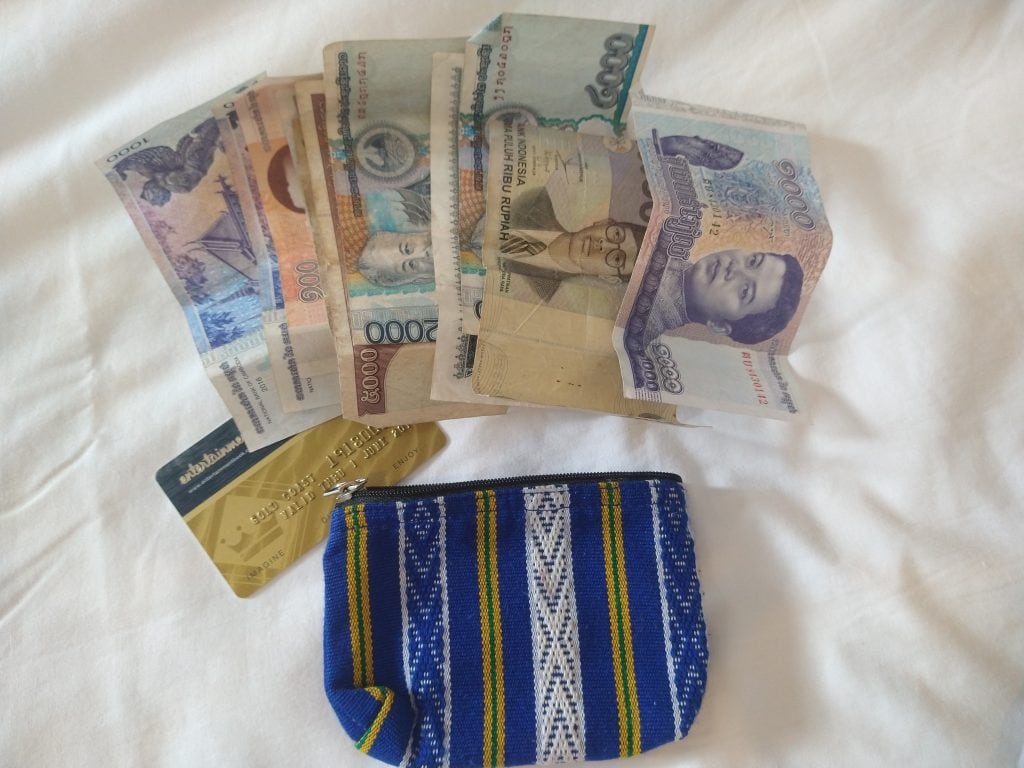
One tip that has given us peace of mind is carrying a throwaway wallet at all times.
It contains:
- expired cards that look similar to Credit Cards
- a few loyalty cards
- small denomination notes from different countries.
At a quick glance, it looks like a normal wallet containing a reasonable amount of cash, even though its value is very low.
Hopefully we’ll never need it, but it’s something we’ve carried for years.
Keep Important Documents Secure
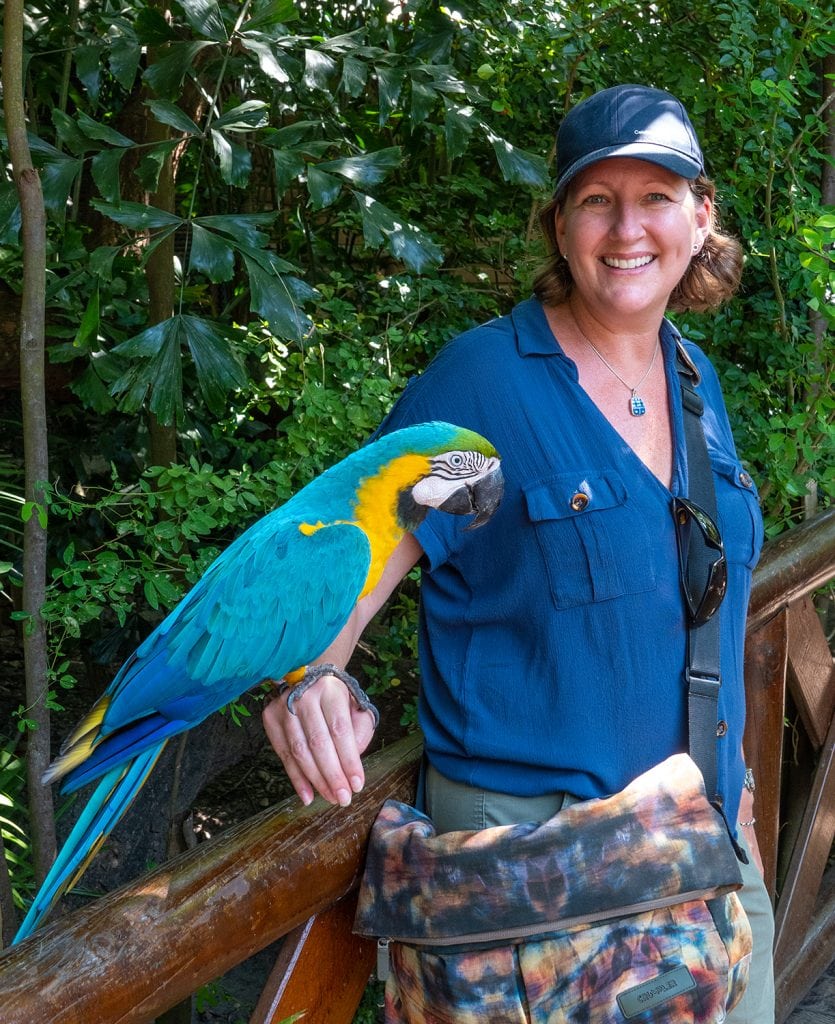
Peta carries a crossbody bag everywhere we go, leaving her hands free and making it much harder for someone to grab.
Inside an internal zipped pocket, she carries:
- copies of our passport information pages with our emergency contact details for our families in Australia and Sweden
- a copy of our travel insurance policy.
The bag is always worn across the body, with it sitting on the side away from the road to reduce the risk of drive-by theft.
Don’t Keep Everything Together
Our general rule is simple: never rely on a single wallet, bag or hiding place.
By spreading our cards, cash and important documents across several secure locations, we’ve built redundancy into our travel routine. If the unexpected happens, we’re inconvenienced rather than stranded.
The same approach applies to the rest of our travel gear as well.
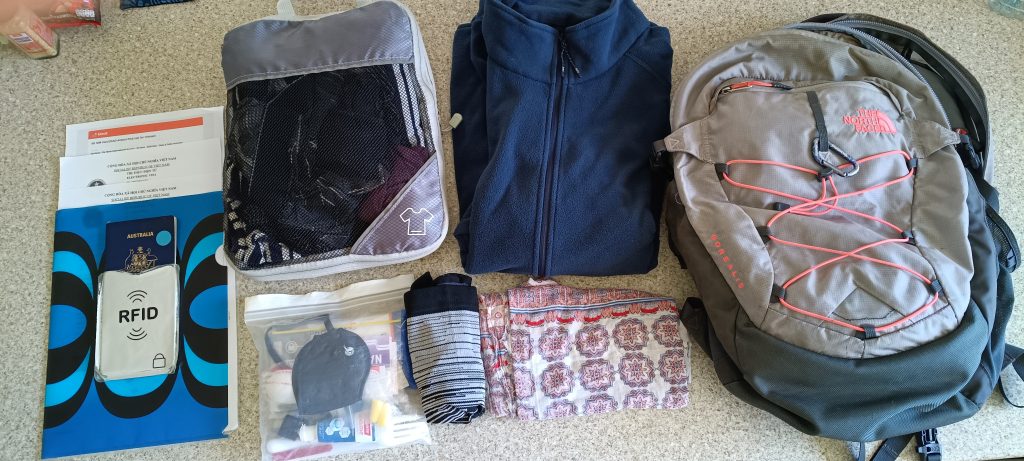
Our Top Tip: We always travel with our credit cards and passports in RFID slips.
Our Personal Accommodation Security Routine
One of the first things we do after checking into new accommodation is secure our valuables. It only takes a few minutes and gives us peace of mind every time we leave the room.
We Prefer Accommodation With a Safe
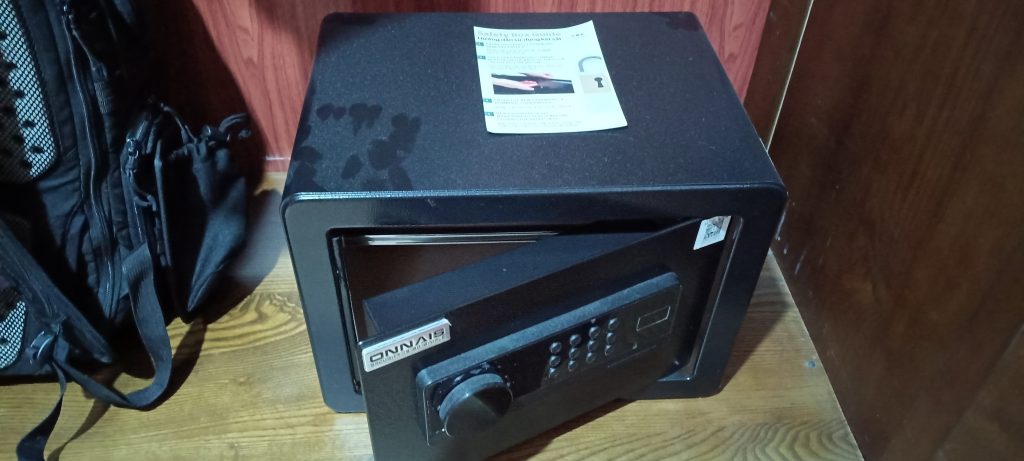
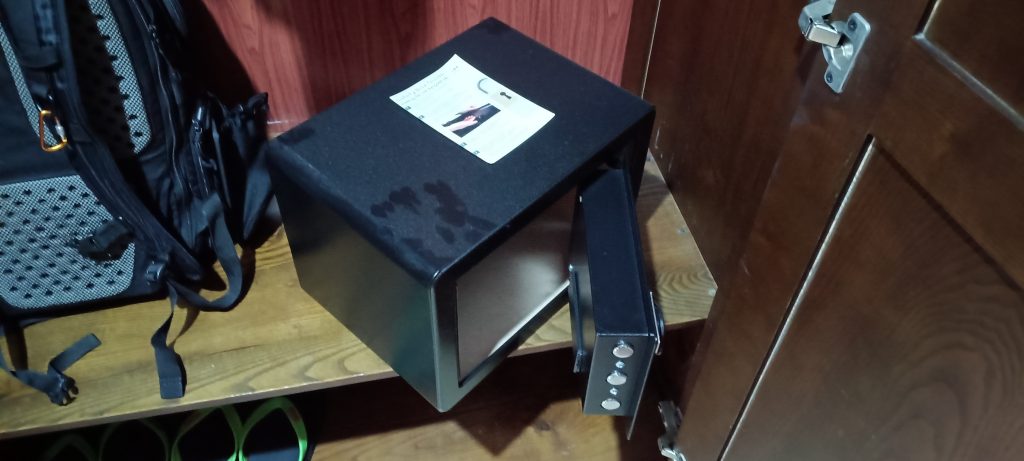
Whenever possible, we book accommodation with an in-room safe that’s large enough to store our valuables.
However, one thing we have learnt over our many years of travel is that even if there is a safe listed as being in the room, on so many occasions it is useless as it is not bolted into anything and can easily be picked up and carried out of the room in a small bag.
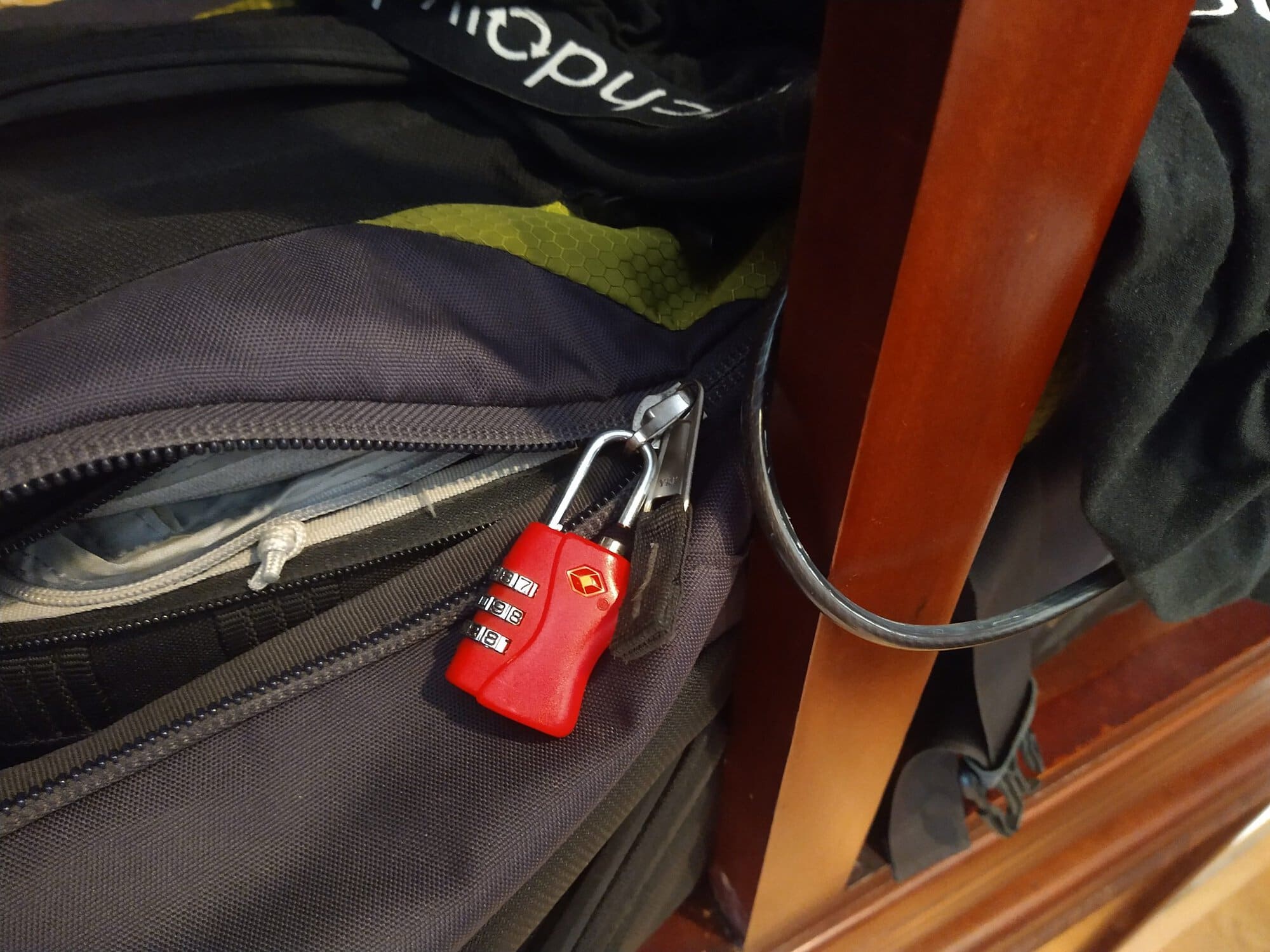
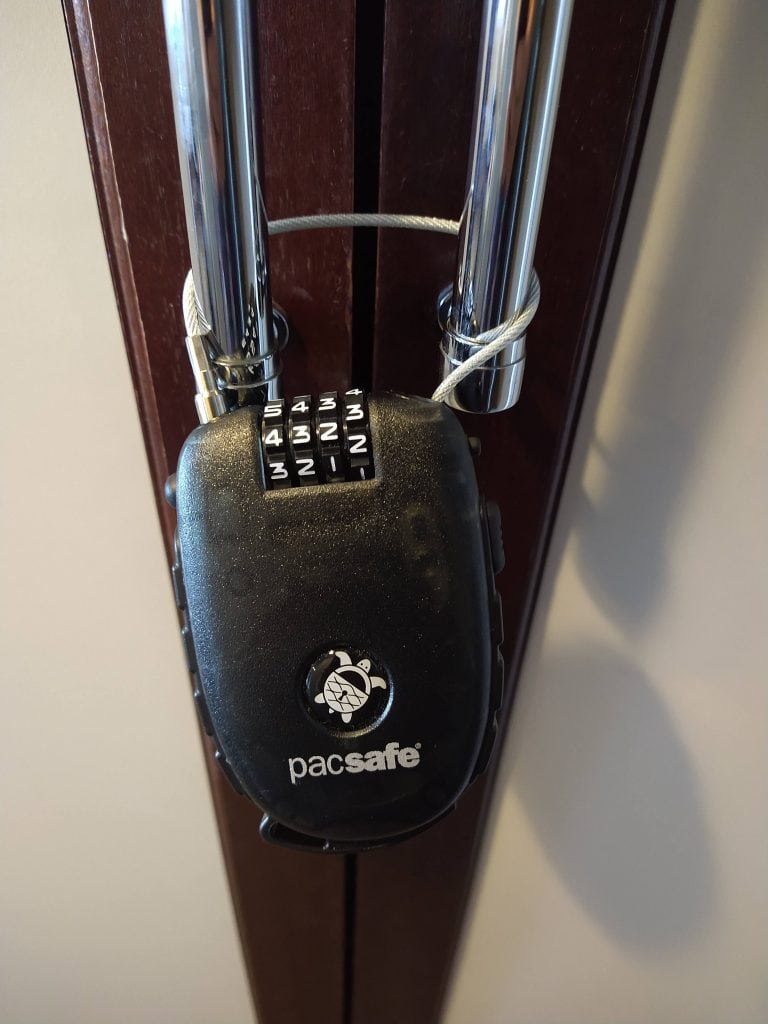
So, whether there is a safe or not, we carefully check the listing photos before booking. We’re looking for wardrobes or cupboards with sturdy handles that we can secure with one of our retractable cable locks.
We Lock Everything Away
Whenever we leave our accommodation, we lock away anything that would be difficult, expensive or time-consuming to replace, including:
- passports
- laptops
- camera gear
- hard drives
- spare credit cards
- emergency cash
- other important documents.
If there’s no safe, we place everything inside a locked bag and secure it with a cable lock to a fixed piece of furniture or inside a locked wardrobe.
We never leave valuables sitting out in plain sight, even if we’re only stepping out for a short time.
We Don’t Assume Accommodation Is Completely Secure
Most accommodation providers are honest, but over the years we’ve learnt it’s better not to become complacent.
Cleaning staff, maintenance workers and previous guests may all have had access to the room at some stage. Taking a few simple precautions helps reduce unnecessary risk and means we can head out for the day without worrying about what’s been left behind.
We Check the Room Before Leaving
Before walking out the door, we have a quick mental checklist:
- valuables locked away
- windows closed and locked where appropriate
- doors locked properly
- electronics switched off if required.
It only takes a minute, but it’s become one of those habits we hardly think about anymore.
These simple routines have protected our belongings through years of full-time travel and have become just another part of checking into a new destination.
Staying Safe While Exploring
Exploring a new destination is one of the best parts of travelling, but it’s also when you’re most exposed to theft, scams and accidents. We try to enjoy ourselves while staying aware of what’s happening around us.
Be Aware of Your Surroundings
One of the best safety habits we’ve developed is simply paying attention.
When we arrive somewhere new, we take extra notice of what’s happening around us, especially in busy tourist areas, transport hubs and after dark. If a street or situation doesn’t feel right, we trust our instincts and leave. It’s always better to turn around than ignore that uneasy feeling.
Slowing down and spending longer in each destination also gives you time to become familiar with local neighbourhoods and routines.
Don’t Look Like an Easy Target
Tourists who appear distracted are often the easiest targets for opportunistic thieves.
We avoid:
- walking while navigating and looking at our phones
- talking on our phones while walking
- stopping suddenly in busy footpaths
- displaying expensive jewellery or electronics unnecessarily.
If we need to check directions, we’ll step into a café, shop or somewhere out of the flow of pedestrian traffic before pulling out our phone.
Carry Your Bag Securely
I (Peta) always travels with a crossbody bag because it keeps both hands free and is much more secure than carrying a shoulder bag.
I wear the bag across my body on the side away from the road, helping reduce the risk of drive-by bag snatching. I also make sure the zips face inwards towards the body where they’re harder for someone to access unnoticed.
Be Extra Careful at Night
Most destinations feel different after dark.
If we’re unfamiliar with an area, we’ll often take a taxi or rideshare rather than walk long distances at night. We also stick to well-lit streets and avoid quiet areas whenever possible.
Confidence Goes a Long Way
You don’t have to know exactly where you’re going all the time, but looking confident can make a difference.
Walk with purpose, stay aware of your surroundings and avoid appearing distracted. If you need to stop and work something out, choose a safe place before getting your phone or map out.
Transport Safety
Getting from one place to another is often when travellers are at their most vulnerable, and this is why taxi and car rental scams are some of the most common. Whether you’re walking, catching public transport or hiring a vehicle, taking a few extra precautions can make a big difference.
Take Time to Understand Local Traffic
Road rules and driving habits vary enormously from country to country.
For example, one of the biggest adjustments for us has been learning how to cross busy roads in places like Vietnam. A pedestrian crossing doesn’t always mean vehicles will stop, or even slow down. Before stepping onto the road, we spend time watching how locals cross and adapt to the local traffic flow.
Never assume the rules you’re used to at home apply everywhere else.
Use Reputable Transport
Whenever possible, we use reputable taxi companies, rideshare services or public transport.
If we’re catching a taxi, we confirm the vehicle and driver before getting in and avoid accepting unsolicited rides from people approaching us in airports or transport terminals.
Be Cautious When Hiring Vehicles
Hiring a car or motorbike gives you more freedom, but it also comes with extra responsibility.
Take time to familiarise yourself with:
- local road rules
- driving conditions
- parking regulations
- insurance requirements.
If you’re not comfortable driving in heavy traffic or unfamiliar conditions, it may be safer to rely on public transport or organised tours.
Stay Alert on Public Transport
Public transport is often safe and an excellent way to explore a destination, but busy buses, trains and metro systems can attract pickpockets.
We keep our bags zipped, avoid displaying valuables and remain aware of who’s around us, particularly during peak travel times. We also keep all of our luggage within reach when possible, or in a visible area to where we are sitting so we can keep an eye on it, especially at stops.
Food and Health Safety
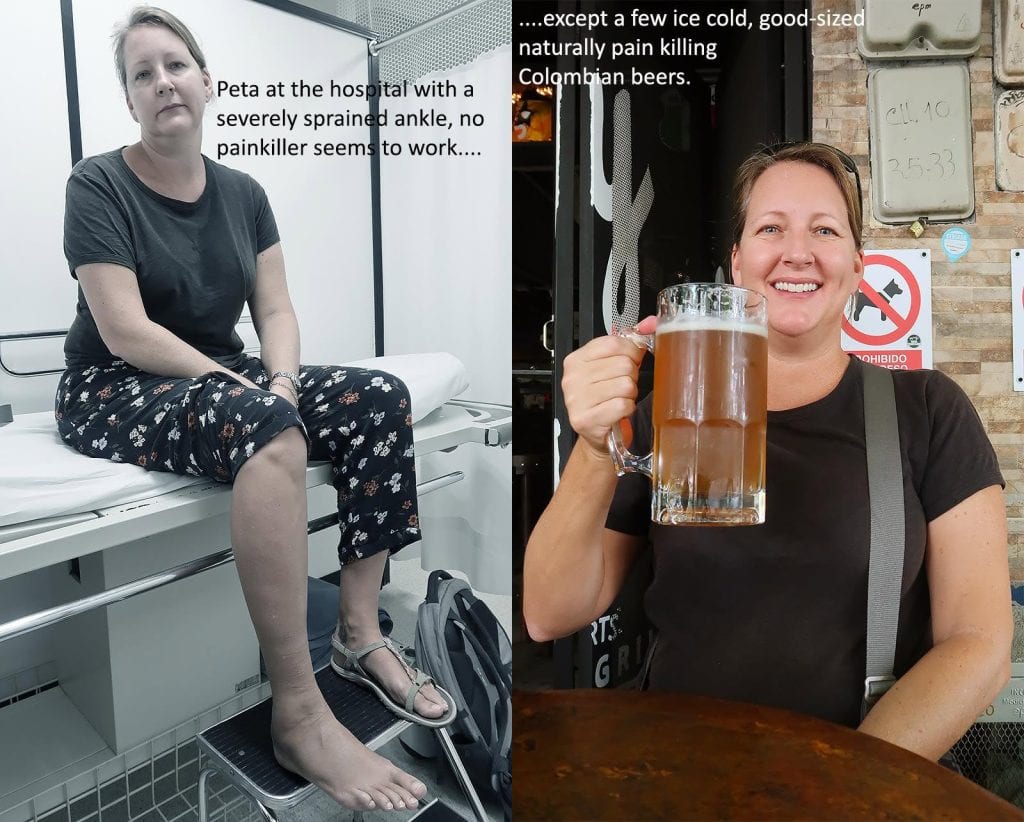
Getting sick can quickly derail a trip, especially if you’re travelling for weeks or months at a time. We also try not to overload our itinerary, especially during long trips, as fatigue often leads to poor decisions. While you can’t avoid every illness, a few simple habits have helped us stay healthy on the road.
Choose Where To Eat Carefully
We love trying new cuisines, but we’re selective about where we eat.
Jonas has a sensitive stomach, so we look for food stalls that:
- are busy with a high turnover of customers
- prepare food fresh in front of you
- are popular with locals
- have elderly people and young families eating there.
Busy places usually mean the food is fresh and hasn’t been sitting around for long.
Practise Good Hand Hygiene
We always carry hand sanitiser and use it before eating if we haven’t been able to wash our hands properly.
It’s a small habit that takes only a few seconds but can help reduce the risk of picking up unwanted bugs while travelling.
Carry A Well-Stocked First Aid Kit
A basic first aid kit travels with us wherever we go.
Ours includes items such as:
- adhesive bandages
- antiseptic wipes
- pain relief
- stomach medication
- antihistamines
- blister treatment
- any personal prescription medications.
Having these on hand means we can deal with minor issues immediately rather than trying to find a pharmacy in an unfamiliar place.
Stay Hydrated and Know Your Limits
Long travel days, hot climates and busy sightseeing can all take their toll.
Drink plenty of water, take regular breaks and don’t try to do too much in one day. Fatigue can affect your judgement and make accidents more likely.
Looking after your health is just as important as protecting your valuables.
Digital Security While Travelling
Keeping your devices and online accounts secure is just as important as protecting your passport or wallet. Many of us now rely on our phones and laptops for banking, bookings and staying in touch with family.
Use Strong Passwords and Two-Factor Authentication
Protect your important accounts with strong, unique passwords and enable two-factor authentication wherever possible. It adds an extra layer of security if your device is lost or stolen.
Avoid Public Wi-Fi for Sensitive Tasks
Free Wi-Fi is convenient, but we avoid using it for online banking or anything involving sensitive personal information.
If you do need to connect, consider using a VPN or wait until you’re on a trusted network.
Back Up Your Photos and Documents
We regularly back up our photos, videos and important documents to the cloud and external storage.
If a phone, laptop or camera is lost, stolen or damaged, our memories and important files are still safe.
Keep Devices Secure
When we’re out exploring, our phones stay securely in our pockets or bags rather than being carried in our hands.
Back at our accommodation, laptops, cameras, hard drives and other electronics are locked away using the same security routine we described earlier.
Before every new travel year, we also make sure all our devices, accounts and important documents are organised and backed up.
Photograph Everything You Rent
One habit that has saved us from potential disputes more than once is photographing and filming everything we rent before we use it.
It only takes a few minutes and can provide valuable evidence if damage is questioned later.
Accommodation
When renting apartments or long-term accommodation where a security deposit is involved, as soon as we arrive, we photograph and video every room before unpacking.
We pay particular attention to:
- scratches and dents
- damaged furniture
- stained carpets or upholstery
- cracked tiles
- marks on walls
- any existing maintenance issues.
Rental Cars and Motorbikes
We follow exactly the same routine before driving away.
We take photos and videos of:
- every panel
- wheels and tyres
- mirrors
- windscreen
- lights
- interior
- existing scratches or dents.
If we spot any damage that hasn’t been recorded, we report it immediately.
These few minutes can prevent lengthy discussions when it’s time to return the vehicle and collect your deposit.
Common Tourist Scams and How to Avoid Them
Scammers often target visitors because they’re unfamiliar with local customs and may be distracted. A little awareness can go a long way towards avoiding unnecessary problems.
Be Wary of Friendly Strangers
Most people you meet while travelling are genuine and helpful, but be cautious if someone you’ve never met is overly friendly or tries to pressure you into making a quick decision.
Whether it’s an unofficial tour, a taxi, or someone offering to ‘help’, trust your instincts. If something doesn’t feel right, politely decline and move on.
Watch for Distractions
Many thefts happen while your attention is focused elsewhere.
Be extra aware if someone:
- creates a commotion
- bumps into you unnecessarily
- tries to distract you with a petition, map or conversation
- gets unusually close in crowded areas.
These tactics are often used to divert your attention while an accomplice targets your valuables.
Use ATMs Carefully
Whenever possible, use ATMs located inside banks, shopping centres or other secure locations.
Before inserting your card, quickly check for anything that looks unusual around the card reader or keypad. If something doesn’t seem right, use a different machine.
Also, when entering your PIN, ensure no one behind can see you and cover the keyboard as you enter the digits.
Trust Your Instincts
One of the most valuable lessons we’ve learnt over the years is to trust that little voice in your head.
If a situation, street or person makes you feel uncomfortable, don’t worry about appearing rude. Simply walk away.
It’s far better to change your plans than ignore your instincts and regret it later.
FAQs: Staying Safe Wile Travelling
If you still have a few questions about how to stay safe while travelling, you’re not alone. Below are answers to some of the questions travellers ask most often before heading overseas.
How can I stay safe while travelling?
The best way to stay safe while travelling is to prepare before you leave, stay aware of your surroundings and develop simple safety habits. Research your destination, choose accommodation in safe neighbourhoods, secure your valuables, carry only the cash and cards you need, and trust your instincts if a situation doesn’t feel right.
What are the most important travel safety tips?
Some of the most effective travel safety tips include purchasing comprehensive travel insurance, securing your passport and valuables, keeping backup bank cards and emergency cash in separate locations, researching your destination before you arrive, and staying alert in busy tourist areas.
Is travelling alone safe?
Solo travel can be very safe with the right preparation. Choose accommodation in reputable areas, let family or friends know your plans, avoid walking alone in unfamiliar areas after dark, and stay aware of your surroundings. Trust your instincts and don’t be afraid to leave a situation that makes you feel uncomfortable.
How do I protect my valuables while travelling?
Keep your valuables locked away whenever you leave your accommodation, preferably in a safe. If a safe isn’t available, use a cable lock to secure your luggage to a fixed object. Avoid carrying all your cash, credit cards and important documents together, and never leave valuables visible in your room or vehicle.
Is travel insurance worth it?
Yes. Travel insurance can protect you financially if you experience medical emergencies, cancellations, lost luggage or theft while travelling. However, travel insurance should complement good travel habits, not replace them. Taking sensible precautions can help prevent many problems from occurring in the first place.
How can I avoid getting sick while travelling?
Choose busy restaurants and street food vendors with a high turnover of customers, practise good hand hygiene, drink safe water where recommended, and carry a basic first aid kit with any personal medications. Taking simple precautions can greatly reduce your risk of illness while travelling.
What should I do if my passport is lost or stolen overseas?
Report the loss to the local police if required, contact your country’s embassy or consulate as soon as possible, and notify your travel insurance provider. Having digital and printed copies of your passport and other important documents can make the replacement process much easier.
What should I carry with me while sightseeing?
Carry only what you need for the day. We recommend taking one credit card, some cash, your phone, identification where required, and any essential medications. Keep backup cards, emergency cash and other valuables securely stored at your accommodation.
In Summary: Awareness, Not Fear
Travelling has enriched our lives in more ways than we ever imagined, and we genuinely believe the world is full of kind, generous and helpful people.
The aim of this guide isn’t to make you fearful of travelling. Quite the opposite. By developing a few simple habits and routines, you can reduce many of the common risks travellers face and spend more time enjoying your journey.
After years of travelling full-time, we’ve found that the best travel safety advice isn’t complicated. It’s about being prepared, staying aware of your surroundings and making sensible decisions day after day.
One quote sums up our approach perfectly:
Travel insurance helps recover your losses after something goes wrong. Good travel habits help stop those losses from happening in the first place.
We hope the routines we’ve shared help you travel with greater confidence, whether you’re planning your first overseas holiday, an extended trip, or embracing a full-time nomadic retirement lifestyle.
Are you planning a nomadic life or are you currently a nomad? Have we missed anything we should add to this travel safety guide or do you still have questions? Feel free to contact us on Facebook or via email and let us know.
You Might Also Like
Looking for more practical travel advice? These guides will help you plan smarter, protect your belongings and enjoy a more confident travel experience.
- Is Travel Insurance Worth It? A Guide For Smart Travellers
Find out why we never travel without insurance and how to choose the right cover for your trip. - How To Keep Valuables Safe While Traveling: Our Top 14 Tips
Learn the systems we use to protect our passports, electronics, money and other valuables while travelling. - How To Prepare For Travel: Our Annual ‘Home Base Reset’ Before Another Year Of Travel
See our step-by-step routine for getting organised before setting off on another year of full-time travel. - Tips for Travel Days: Avoid Common Travel Mistakes
Simple tips to help your travel days run more smoothly while avoiding common mistakes and unnecessary stress. - How To Pack for Long Term Travel (Without Overpacking or Sacrificing Comfort)
Discover how we pack efficiently for months of travel while keeping everything organised and secure. - How To Find Affordable Accommodation While Travelling Full Time (Our Proven System)
Learn how we research, compare and book accommodation that suits both our budget and our safety requirements. - How to Pick a Travel Destination: 13 Factors to Consider
Our practical guide to choosing destinations that match your interests, budget, travel style and comfort level. - Or Start Here:
Your complete guide to planning and living a nomadic retirement lifestyle
DISCLAIMER: This article contains affiliate links and Nomadic Retirement Travel are a participant in the Amazon Services LLC Associates Program. That means if you click a link and make a purchase, we make a small commission at no extra cost to you. Please see our disclosure policy for more information.
