
Thinking Of Selling Everything And Traveling? A Nomad Couple’s Honest Guide to Letting Go

We sold everything to travel the world! Discover how one couple let go of it all — house, cars, and belongings — to embrace a minimalist nomadic life.
What if everything you owned could fit into a couple of suitcases?
In 2017 when we became retired nomads, that question stopped being hypothetical for us.
We were living what looked like a successful life in Australia; steady careers, a beautiful home, cars, a motorbike, even a boat. But behind the scenes, we were exhausted. Burnout had quietly replaced fulfilment, and we found ourselves craving something we couldn’t buy: time, freedom, and simplicity.
So we made a decision that most people only talk about.
We sold everything.
Not just the furniture. Not just the cars.
The house. The business. Nearly all of our belongings.
But here’s what no one tells you: selling everything to travel isn’t just about clearing out cupboards. It’s about confronting attachment, fear, identity, and the quiet question of “What if this doesn’t work?”
It’s emotional.
It’s logistically intense.
And it’s incredibly freeing.
This isn’t a romantic ‘just do it’ story.
In this guide, we’ll walk you through:
- Why we made the leap
- The practical system we used to sell nearly everything
- The simple decision rules that stopped us from overthinking
- How we handled sentimental items
- Why we chose not to use storage
- What we actually packed
- And how we avoid re-accumulating clutter today
If you’ve ever wondered whether you could sell everything and travel (or whether you should) this is our honest account of what it really takes.
We Sold Everything to Travel the World: Key Takeaways
- We sold our house, cars, boat, motorbike, business, and nearly all our belongings to travel full-time.
- Decluttering and downsizing started 1–2 years before our official departure with garage sales, ads and donations.
- Letting go of sentimental items was tough but freeing — we only kept a few cherished pieces.
- We made a deliberate choice not to use storage (and we don’t regret it).
- Selling everything was like a part-time job — emotionally and logistically intense.
- Key strategy: sell early, price properly, use platforms like Gumtree / Facebook Marketplace / Craigslist, and stay focused.
- Our final cleanout? A $200 bundle sale to a single family!
- Letting go created space, physically and mentally, for a more intentional lifestyle.
- Now we only buy what adds value and supports our freedom as nomadic retirees.
- Hardest thing we’ve done… and the most rewarding.
Why We Sold Everything (Including the House, Cars, Boat and Business)
For most of our adult lives, we did what was expected. We built successful careers, bought a house, and filled it with all the things we thought we needed: cars, a motorbike, a boat, and even a business. On the surface, life looked great. But underneath it all, we were running on empty.
Our demanding jobs left little time for the kind of travel we longed for. The more time we spent watching travel videos and reading about others who had taken the leap, the more restless we became. We didn’t want to wait until retirement age to start really living.
So in 2017, we made a decision that would change everything: we’d take an “adult gap year” and travel the world. That one-year plan quickly turned into something far more profound. The only way to make it happen, though, was to let go — of our home, our vehicles, our business, and nearly everything we owned.
Selling everything to travel wasn’t a whim. It was an intentional shift towards the life we truly wanted. It felt like the gateway to freedom, not just physical freedom to move, but emotional and mental freedom too. Once we made that call, there was no turning back.

Letting Go: The Emotional Side of Extreme Downsizing
Letting go wasn’t easy.
Like most people, we’d accumulated things that held deep sentimental value such as decorative pieces picked up during our travels, heirlooms passed down through family, and items that reminded us of particular seasons in life. As we prepared to sell everything to travel, it wasn’t the big-ticket items that were the hardest to part with, it was the little things that told our story.
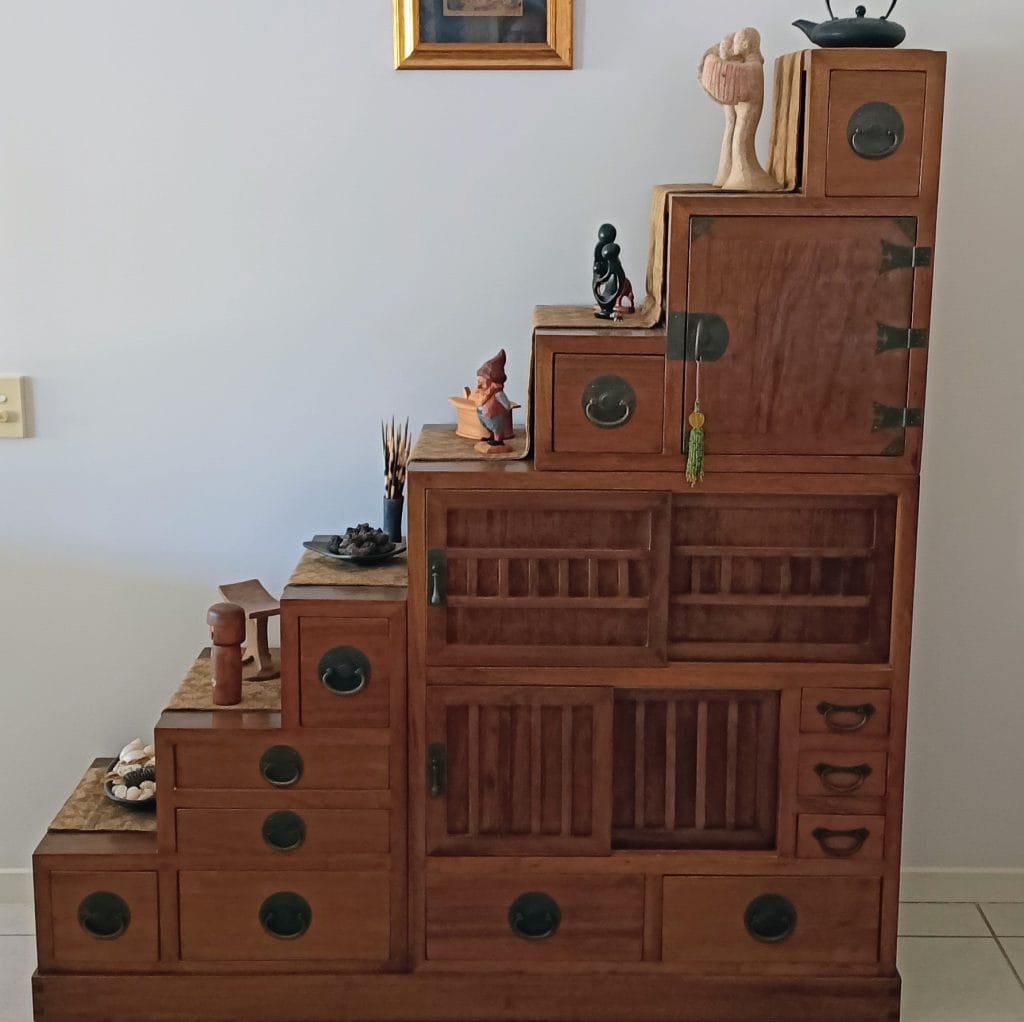
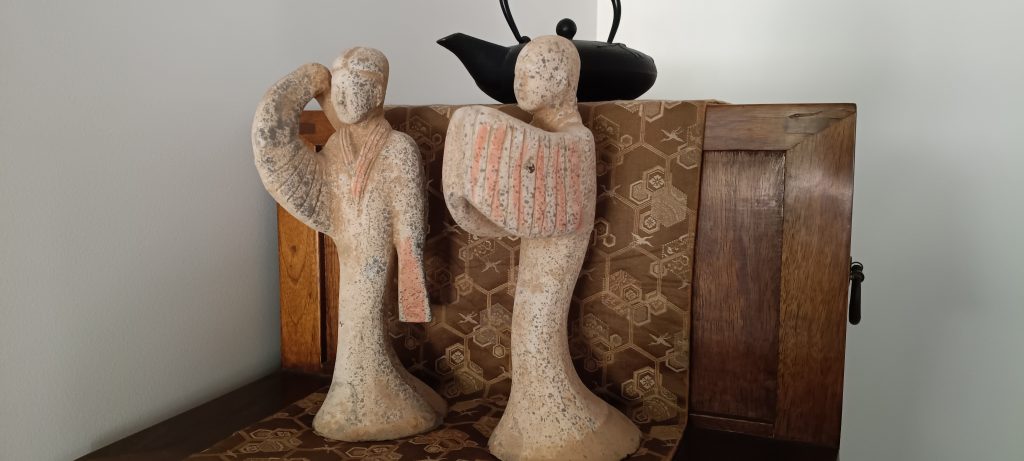
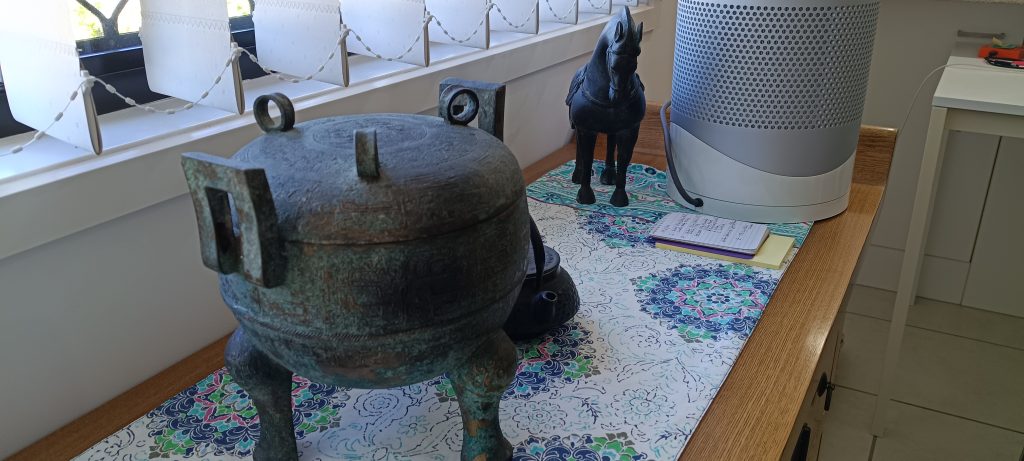
We didn’t keep much, but the few things we did hold onto were special. We moved to Peta’s mum’s house a handful of antique furniture pieces, including a beautiful Japanese step tansu that Peta had designed herself, and some smaller decorative items that could one day make their way into a future home.
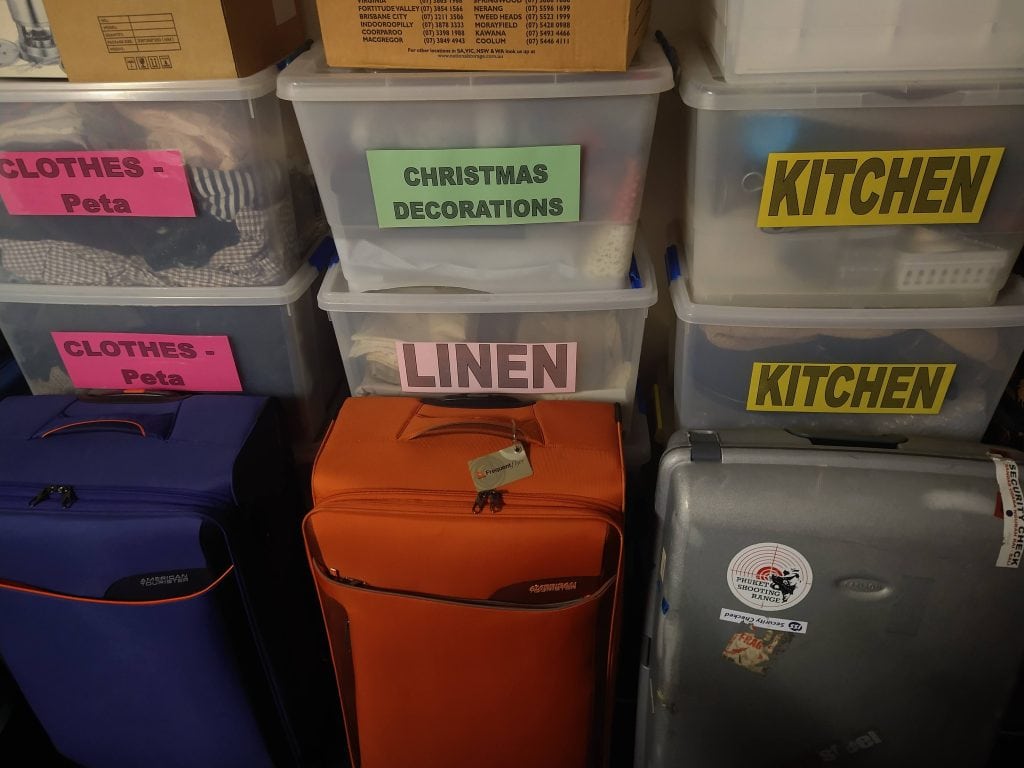
Everything else, just a few boxes of clothes, linens and kitchen gear, was packed into her mum’s garage in Australia, where we have a little corner of space to call our own when we visit.
Sifting through everything was emotionally exhausting. We had moments where we stood over boxes, wondering whether to keep something simply because it reminded us of somewhere we’d been or something we’d felt.
But over time, something shifted. We realised we weren’t letting go of the memories, we were letting go of the clutter. The more we released, the lighter we felt. We came to understand that possessions don’t hold happiness. They can remind us of joy, but they aren’t the joy itself.
And with every cupboard cleared, every shelf emptied, we felt more aligned with the life we were moving towards — one of freedom, simplicity, and intentional living.
How We Handled Sentimental Items (Without Keeping Everything)
Let’s be honest, sentimental items are the hardest part. It’s easy to sell a coffee table. It’s much harder to part with something tied to a memory, a season of life, or a loved one.
Here’s what helped us move through that stage without keeping everything ‘just in case’.
1. We Created a ‘Maybe Box’ With a Deadline
If we truly couldn’t decide, the item went into a temporary ‘maybe’ box. But we gave ourselves a deadline. If we hadn’t opened that box or thought about the item within three months, it was time to let it go.
2. We Took Photos Before Letting Things Go
For some items, the memory mattered more than the object. Taking a photo allowed us to keep the story without keeping the physical item. Surprisingly, that small step made it much easier to release things.
3. We Invited Family to Choose What Meant Something to Them
Instead of storing heirlooms ‘for someday’, we offered meaningful pieces to family members now. It felt good knowing those items were being used and appreciated, rather than sitting in a box.
4. We Limited Ourselves to a Small Memory Allowance
We didn’t say ‘no sentimental items’. We just gave ourselves boundaries. A few special antiques. A handful of decorative pieces. That was enough. The limit forced us to choose what truly mattered most.
Over time, we realised something important:
The memories weren’t in the objects. They were in us.
Once we understood that, letting go became lighter.
How We Started Minimising Early
Our journey toward minimalism didn’t begin the day we decided to travel full time. It actually started a couple of years earlier, almost by accident.
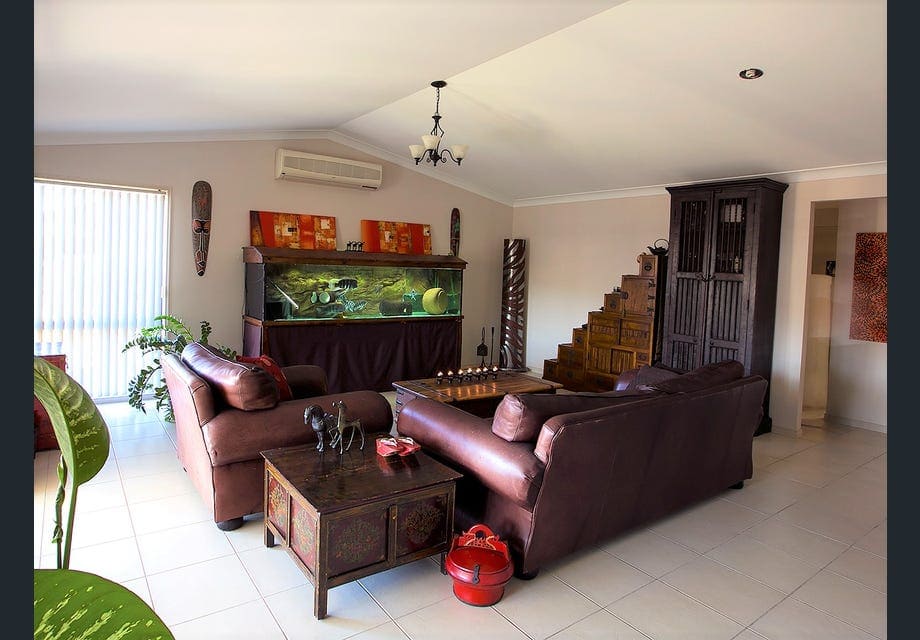
At the time, we were living in a five-bedroom house that had slowly filled up with things. Furniture, gadgets, holiday decorations, and cupboards full of “just in case” items. It all began to feel like too much. We were drowning in stuff and craving more space, mentally and physically.
When the moment came to make the big decision — to sell everything and travel — we had already laid the groundwork. Our earlier efforts made the process less overwhelming. We didn’t have to start from scratch, and we already knew how freeing it felt to own less.
Living with less gave us more clarity, more calm, and more control over our time. It helped us focus on what we valued most, and none of it could be bought.
Make a Game Plan: Start With the End in Mind
Selling everything to become a nomad is no small task. Without a clear plan, it’s easy to become overwhelmed. That’s why we approached the process like a project, starting with the end in mind.
We gave ourselves a 12-month timeline to get it all done. That might sound ambitious, but in truth, we’d already started the year before with casual decluttering. When it came time to fully commit, we were ready to get serious.
The first step was setting a clear departure date and working backwards. With that in mind, we created monthly milestones i.e. rooms to tackle, deadlines to meet, and sales to schedule.
We recommend starting in the areas you don’t see every day such as cupboards, storage rooms, the garage. These hidden zones are where “out of sight, out of mind” clutter piles up. They’re also the best places to build early momentum and make fast progress.
It’s also important to allow extra time to sell unique or high-value items. Some things just don’t move quickly. For example, we had a beautiful leather lounge from Africa that took more than six months to sell. Special pieces like that often require the right buyer, and lots of patience.
Having a visual image of our departure day (walking out of an empty house with nothing left but a few bags and big dreams) kept us highly motivated. We knew what we were working toward, and that vision gave every decluttering session purpose.
Whether you’re aiming to leave in six months or two years, give yourself a long runway. Downsizing is a slow, emotional process, and you’ll want time to do it well, not just fast.
The Simple Decision Rules That Helped Us Let Go Faster
When you’re staring at a house full of belongings, decision fatigue is real. We quickly realised that if we tried to ‘think deeply’ about every single item, we’d still be sorting five years later.
So we created a few simple decision rules to speed things up. These rules saved us from endless second-guessing:
If it costs more to store than replace → let it go.
When we ran the numbers, most items were cheaper to rebuy than to store long-term.
If we hadn’t used it in 12 months → sell or donate it.
Exceptions were rare. If something truly mattered, we would have used it.
If it was a ‘just in case’ item → we questioned the scenario.
How likely was that ‘case’? And could we borrow, rent, or repurchase if needed?
If it didn’t support our future lifestyle → it didn’t stay.
This was the big one. We weren’t downsizing for our old life, we were designing a new one. If an item didn’t fit that future, it had no place in it.
These rules didn’t remove emotion entirely, but they dramatically reduced overwhelm. Instead of debating every object, we measured it against our new life.
And that clarity changed everything.
Step-by-Step: How to Sell Your Stuff and Travel
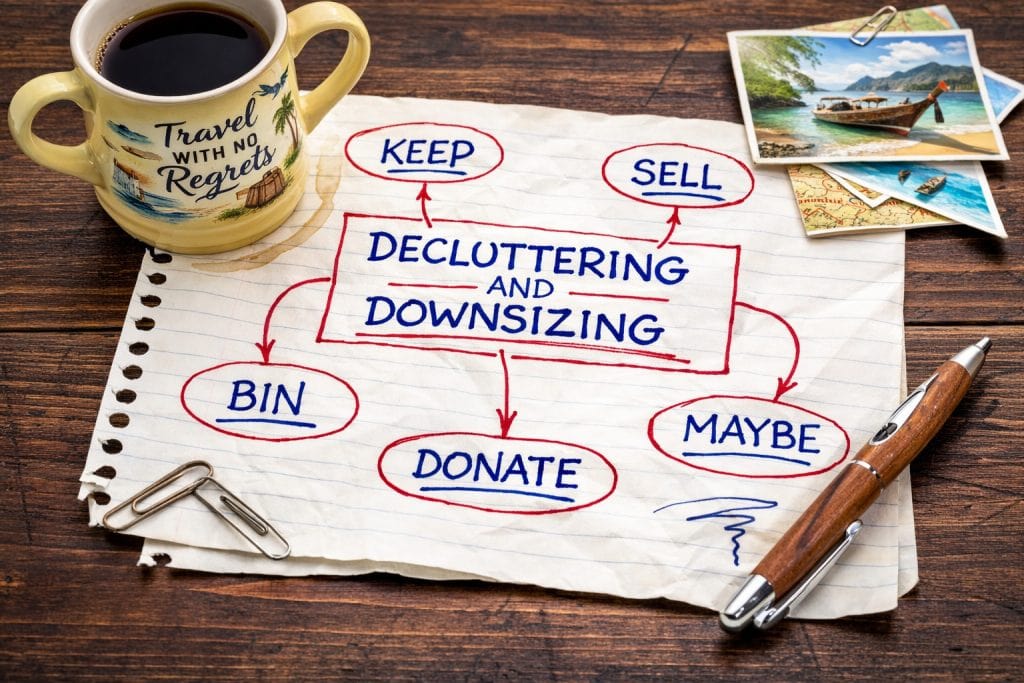
Once we decided to sell everything and travel the world, we created a step-by-step system to tackle the task. It wasn’t always easy, but breaking it down made it manageable, and even exciting at times. Here’s exactly how we did it:
Step 1: Detach from Attachments
The first step was internal. We had to mentally and emotionally separate ourselves from our belongings. We reminded ourselves that memories live in us, not in objects. Every item we let go of brought us closer to the life we wanted.
Step 2: Decide What to Donate, Appraise, or Give Away
We sorted everything into categories. High-value or sentimental items were appraised or offered to family. Useful everyday items went into “donate” or “garage sale” piles. We wanted our things to have another life, just not in our luggage.
Step 3: Sell Early, Sell Often (Start 12 Months Out)
We got serious about selling a year before departure. Beginning early helped us avoid last-minute panic, and gave us time to find the right buyers for the more unique items.
Step 4: Research, Price Properly
We looked up local prices and similar listings in classified ads in the newspapers and on Gumtree, and priced all our items similarly, or even cheaper.
Step 5: Sell Everywhere
We used a multi-layered strategy:
- Gumtree (Australia’s version of Craigslist) listings for any item was worth more than AUD $30. We didn’t want to spend too much time haggling over small items, so we set clear price thresholds.
- Two rounds of garage sales to offload bulk items
- A final “garage bundle” sale: Everything left in our garage for $200, all picked up by a single family over the course of a week.
This combination gave us maximum reach with minimal stress.
Step 6: Stay Focused on Your Bigger Life Goals
There were moments when it felt tedious. But we stayed grounded by focusing on our “why”: freedom, travel, and a simpler life. Each sale brought us closer.
Lessons We Learned Selling Everything We Owned
Selling nearly everything you own isn’t just a logistical challenge, it’s a learning experience. Here are some of the biggest takeaways from our downsizing journey:
You Have More Stuff Than You Think
It’s astonishing how much accumulates in closets, drawers, and sheds. Every time we thought we were nearly done, we’d uncover another cupboard or storage box we’d forgotten about. Be prepared for surprises.
It’s a Part-Time Job
Selling everything takes serious time and energy. Between photographing, listing, messaging potential buyers, negotiating prices, and coordinating pickups, we often joked it felt like a second job. But the payoff, both financial and emotional, was worth it.
Don’t Count It Sold Until the Cash Is in Your Hand
Just because someone says “I’ll take it” doesn’t mean the deal is done. We learned not to remove listings or turn down other buyers until the item was actually gone and the money was in our hands.
What Sells and What Doesn’t
Some things flew out the door such as kitchen gadgets, quality furniture, outdoor gear. Others lingered despite being valuable. Sentimental or niche items often needed specialised buyers or ended up being donated. Flexibility helped us let go with less frustration.
What We Didn’t Do — And Why That Helped
Sometimes, what you don’t do makes all the difference. For us, one of the best decisions we made was not getting a storage unit.
No Storage Unit = No Future Clutter
We made a deliberate choice to avoid paid storage. On the surface, it might seem like the easy option — just box everything up and figure it out later. But for us, that felt like deferring decisions we needed to make now.
We asked ourselves some tough questions:
- What would we even store?
- Would the items be worth the cost of long-term storage?
- Could we replace them for less if we needed them again?
- Would we want them in a future life we hadn’t yet designed?
The more we ran the numbers and visualised the emotional burden of keeping “just in case” items, the clearer our answer became.
The Hidden Costs of Storage
For us, the downsides far outweighed the benefits:
- Monthly costs that quickly add up over a year or more
- Mould and pest risks in long-term units
- Insurance expenses
- The mental weight of having things in limbo
When Storage Does Make Sense
That said, there are situations where storage might work. If you have access to free space at a family member’s home, it can be a helpful compromise. Peta’s mum’s house in Australia had both a spare room and garage space, which meant we could keep a few boxes and cherished antiques without financial or emotional strain.
But for us, the key was leaning into minimalism, not just as a temporary necessity, but as a foundational value for our new lifestyle.
Letting go of storage meant letting go of the need to cling to a past version of ourselves. And that created space – not just physically, but emotionally — for something new.
The Feeling of Freedom: What Happens After You Let Go
The day our house was finally empty, it hit us: we’d really done it.
For months, we’d been living in a space that slowly echoed more and more. First the bookshelves were bare. Then the couch was gone. Eventually, we were sitting on a blow up mattress in the living room, eating takeaway from paper plates. It should have felt strange. But instead, it felt light. Clean. Free.
The final cleanout was emotional, yes, but also exhilarating. Every item that left the house made our vision of nomadic life more real.
Getting rid of stuff didn’t leave a void. It cleared space for adventure, presence, and intentional living. We began to think less about what we owned, and more about what we wanted to experience.
As we stepped into this new lifestyle, our mindset transformed. We no longer felt tied down by our possessions. The pressure to maintain, clean, organise, and insure “things” disappeared. In its place was something far more valuable: mobility, clarity, and freedom.
We realised we didn’t need to own a home to feel grounded. We didn’t need shelves of souvenirs to remind us where we’d been. Our lives became the collection. Our stories, the souvenirs.
Letting go was the turning point. It was when travel stopped being a plan and became our new way of being.
What We Actually Packed (And What We Didn’t)
“So what did you actually take?”
The truth? Not much.
Between the two of us, everything we owned fit into a couple of checked suitcases and daypacks. That was it.
Here’s roughly what made the cut:
Clothing
Simple, versatile pieces that could mix and match. Neutral colours. Lightweight fabrics. Enough for different climates, but nothing excessive. Nothing ‘just in case’. Everything earned its place.
Shoes
One pair of comfortable walking shoes, one lightweight travel sandal, and one pair of thongs.
Tech Gear
Laptops, phones, camera gear, a few essential cables, chargers, and essential travel adapters. We kept tech purposeful and minimal i.e. only what supported our work and photography.
Important Documents
Passports, hard copies of essential paperwork, and a small digital backup system stored securely online.
And that’s where it stopped.
What didn’t make the cut?
- Bulk kitchen items
- Decorative pieces
- ‘Just in case’ clothing
- Furniture (obviously!)
- Anything that didn’t directly support our nomadic life
We realised something powerful during packing: If it didn’t fit in our luggage, it didn’t fit in our future.
And surprisingly, we never felt deprived. We felt lighter.
If you’d like, we’ve written a full breakdown of what’s in our current travel bags here → [link to our packing checklist].
Reflections: Was It Worth It?
Absolutely — without question.
Letting go of nearly everything we owned was one of the hardest, most confronting things we’ve ever done. It challenged our attachments, our identity, and the narratives we’d built around success and security. But it also gave us something far more valuable: clarity, confidence, and complete freedom.
The Hardest Thing Became the Most Rewarding
There were moments of doubt, especially in the early stages. Parting with sentimental items or watching beloved pieces go for less than they were worth was tough. But each time we let go, we stepped closer to the life we truly wanted. The discomfort was temporary; the reward was lasting.
We Stopped Chasing Stuff to Feel Fulfilled
This process reshaped our relationship with “things.” We stopped using stuff to mark milestones or fill emotional gaps. Now, we buy with intention, and only if it truly adds value or joy.
We’ve resolved not to return to a lifestyle of accumulation. Instead, we invest in experiences, relationships, and personal growth. Everything we now own fits into a few bags, and yet our lives feel fuller than ever.
How We Avoid Re-Accumulating ‘Stuff’
One of the biggest questions we get is: “How do you stop yourself from slowly collecting things again?”
Minimalism isn’t a one-time event. It’s a mindset and a set of habits.
Here’s what keeps us aligned with the lifestyle we worked so hard to create:
1. The One-In, One-Out Rule: If something new comes in (clothing, tech, gear), something else leaves. This keeps our bags, and our lives, balanced.
2. The 24-Hour (Sometimes 7-Day) Rule: We rarely buy anything impulsively. If we think we ‘need’ something, we wait. Most of the time, the urge disappears.
3. We Buy for Our Current Life — Not a Fantasy Version of Ourselves: No ‘just in case’ outfits. No hobby gear for hobbies we might take up one day. If it doesn’t support how we actually live, it doesn’t come with us.
4. Souvenirs Must Be Small, Useful, or Consumable: We’ve replaced shelves of souvenirs with experiences. If we do buy something, it must fit in our bags and serve a purpose.
5. We Do Regular Mini-Declutters: Every few months, we reassess what we’re carrying. Even nomads can accumulate. A quick reset keeps things intentional.
Letting go once was powerful.
Learning how to stay light is what made it sustainable.
Freedom as a Lifestyle
This isn’t just about selling belongings, it’s about creating space for a life you design with purpose. And we’re living proof that it’s possible.
What If I Sell Everything And Then Change My Mind?
This is one of the biggest fears people have, and it’s completely valid.
Here’s the truth: selling everything doesn’t trap you. It frees you.
If we ever decided full-time travel wasn’t for us anymore, we could rebuild. Furniture can be bought again. Dishes can be replaced. Even a home can be repurchased or rented.
What’s much harder to recover is time.
For us, the greater risk wasn’t selling everything. The greater risk was staying stuck in a life that no longer felt aligned.
And remember, you don’t have to go from 0 to 100 overnight. Some people test the waters with a six-month lease break, a one-year gap year, or a trial period abroad.
Selling everything isn’t about burning bridges. It’s about giving yourself permission to design something different.
FAQs: Selling Everything And Traveling
Now that you have read about how to sell all your stuff and travel the world, you might still have a few questions. Don’t worry, we’ve got you covered! Here are some frequently asked questions about downsizing to travel.
1. Is it really possible to sell everything and travel the world?
Yes, it is! With the right planning, mindset, and timeline, many people, us included, have downsized their lives and embraced a nomadic lifestyle.
2. How long does it take to sell everything before traveling?
We recommend starting at least 12 months out. Unique or valuable items can take months to sell, so give yourself time to declutter, list, and let go gradually.
3. Should I keep anything in storage while travelling?
That depends on your situation. We chose not to use storage due to cost, maintenance, and mental clutter. Instead, we stored a few sentimental items with family.
4. How did you deal with sentimental items?
It wasn’t easy. We kept a few meaningful antiques, decorative pieces and quality kitchen utensils. The rest we donated, sold, or gifted. Letting go was emotional, but also freeing.
5. How to sell everything and travel and what’s the best way to sell furniture and household items?
We used a mix of garage sales, Gumtree ads (Australia), and bundle deals. Anything valued over AUD $30 went on Gumtree, and we had a $200 garage clearance sale at the end.
6. Did you ever regret selling everything?
Not once. The freedom, flexibility, and clarity we’ve gained far outweigh the things we gave up. We’d do it all again in a heartbeat.
7. What if I want to return to a “normal” life later?
Downsizing doesn’t mean you can’t start fresh later. If we settle down again, we’ll simply rebuild with intention, buying only what supports our new lifestyle.
In Summary: It’s Not Just About the Stuff
At first, selling everything to travel might seem like a purely practical decision. But for us (and for many others) it became something much deeper. It’s not just about clearing out closets. It’s about clearing space for the life you truly want.
Don’t Fear the Process — It’s a Path to Freedom
If you’re reading this and feel that quiet (or not-so-quiet) tug toward something different… trust it. You don’t have to have all the answers. You just have to start. One drawer, one cupboard, one decision at a time.
We didn’t have a detailed roadmap when we began. We had a sense of possibility and a belief that something better was waiting. And we were right.
Reframing Value: Experiences Over Things
We used to attach value to things — a sofa, a car, a curated home. Now, our most valuable moments can’t be boxed or sold: hiking through new landscapes, meeting people from different cultures, waking up in a new place with nothing but curiosity and each other.
Stuff has a price. Experiences have meaning.
Redefining “Home” as a Nomad
Home is no longer a postcode. It’s wherever we are, together. It’s the freedom to choose a different view, follow our curiosity, and create new routines in unfamiliar places. That freedom came from letting go of what no longer served us.
You’re Not Alone
We hope our story encourages you to explore what freedom might look like in your own life. If you’re standing at the edge of a big life shift, know that it’s okay to feel uncertain. But don’t let that stop you. You’re not alone, and there’s a whole world waiting for you.
Are you planning a nomadic life or are you currently a nomad? Have we missed anything we should add to this list or do you still have questions? Feel free to contact us on Facebook or via email and let us know.
Nomadic Retirement Living: Related Blog Posts
Are you dreaming of a nomadic retirement, but are feeling overwhelmed by all the information out there and don’t know where to start? Check out all the articles we’ve written about ‘nomadic retirement travel’ to help you navigate all aspects of the nomadic retirement lifestyle.
- Is Nomadic Retirement For You? 11 Factors To Consider
- The Advantages and Disadvantages of Nomadic Life: Our Personal Experiences…
- The Disadvantages of Nomadic Life: What Most People Don’t Talk About
- Our Top Slow Travel Tips For Nomadic Retirees
- Geoarbitrage for Nomadic Retirees: Maximizing Life on a Budget
- Is A Fulltime Travel Lifestyle For You? What You Need To Consider
- Adult Gap Year Tips: For A Life-Changing Adventure (A Great Way to Trial this Lifestyle)
- Rent or Sell Your House to Travel? Our Honest Take After Going All-In
- How To Prepare For Travel: Our Annual ‘Home Base Reset’ Before Another Year Of Travel
- 17 Best Slow Travel Destinations – Where You Can Live Comfortably On USD $3000 A Month Or Less
- 21 Cheapest Countries For Retired / Digital Nomads
DISCLAIMER: This article contains affiliate links and Nomadic Retirement Travel are a participant in the Amazon Services LLC Associates Program. That means if you click a link and make a purchase, we make a small commission at no extra cost to you. Please see our disclosure policy for more information.
