
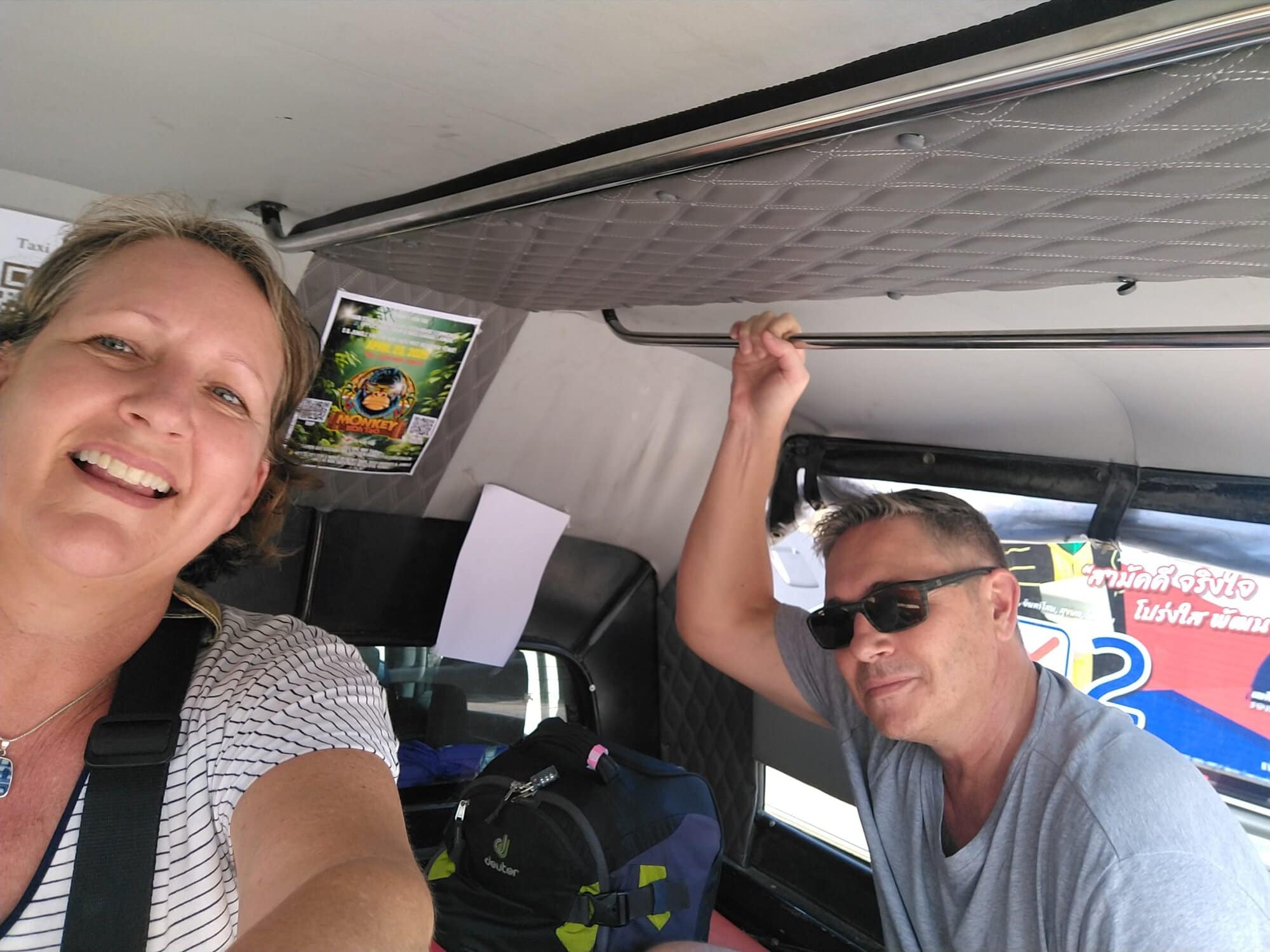
Tips for Travel Days: Avoid Common Travel Mistakes

Let’s be honest: even as full-time travellers for the past 8 years, travel days can still throw us off balance.
From missed connections and long queues to dragging a suitcase up a hill in 35°C heat, we’ve had our fair share of messy moments. One travel day that stands out? Our flight from Cebu to Manilla was delayed, leaving us running through the airport and having to catch buses to get to our connecting flight gate. And upon arrival at the gate, we were informed our checked luggage would not be joining us on the flight.
We had a choice – get on the flight without our luggage or forfeit the flight cost and rebook. We decided to take the risk and luckily, our luggage was delivered to us in our Bangkok hotel the next day!
But over the years, we’ve learned how to make travel days less chaotic and more comfortable, even enjoyable at times.
Whether you’re catching a short flight or making a multi-transfer trek across continents, these practical tips can help reduce stress, keep you organised, and make the whole experience far less exhausting.
Let’s dive into what actually works.
Quick Travel Day Tips: Key Takeaways
Want smoother travel days without the stress? Here’s the short version:
- ⏰ Leave early — extra time reduces anxiety
- 🎒 Pack light — mobility matters more than you think
- 🛂 Keep documents handy — no digging through bags at security
- 😴 Sleep well — tired travellers make travel harder
- 🔄 Expect delays — flexibility is your best tool
- ❤️ Don’t blame each other — stay solution-focused as a team
- 👛 Carry a travel day kit — snacks, water, chargers, essentials
- 👕 Dress for comfort — layers and easy shoes win every time
- 🧠 Treat travel days as transition days — not sightseeing marathons
Bottom line: Preparation + mindset = calmer, smoother travel days.
The Reality of Travel Days in Nomadic Retirement
When we first began travelling full-time, we thought travel days would eventually feel effortless. After all, how hard could it be to get from A to B?
But here’s what we’ve learned after years of nomadic retirement living:
Travel days are rarely just about the flight or train.
They’re about packing up your temporary home, checking out, organising transport, navigating queues, waiting, transferring, and then settling into a completely new environment.
Even with slow travel, these days can feel draining.
Why Travel Days Feel So Exhausting
For many retired nomads (especially those 40+), it’s not just logistics, it’s energy management.
- Early alarms
- Heavy bags
- Long walks through terminals
- Standing in queues
- Delays and schedule changes
- New accommodation check-ins
It’s a lot.
And if we’re honest, the stress usually comes from unrealistic expectations. We assume travel days should run smoothly and efficiently. When they don’t, frustration creeps in.
The Truth: Travel Days Aren’t ‘Lost Days’
One mindset shift changed everything for us: We stopped treating travel days as sightseeing days.
Instead of planning museum visits or full exploration on arrival, we now treat travel days as:
- Transition days
- Light activity days
- Reset days
Sometimes that means:
- A simple walk around the neighbourhood
- Picking up groceries
- Finding a good local café
- Or just resting
By lowering the pressure, travel days feel far less chaotic.
In fact, embracing travel days as part of the rhythm of nomadic life, rather than interruptions to it, has made our entire lifestyle more sustainable.
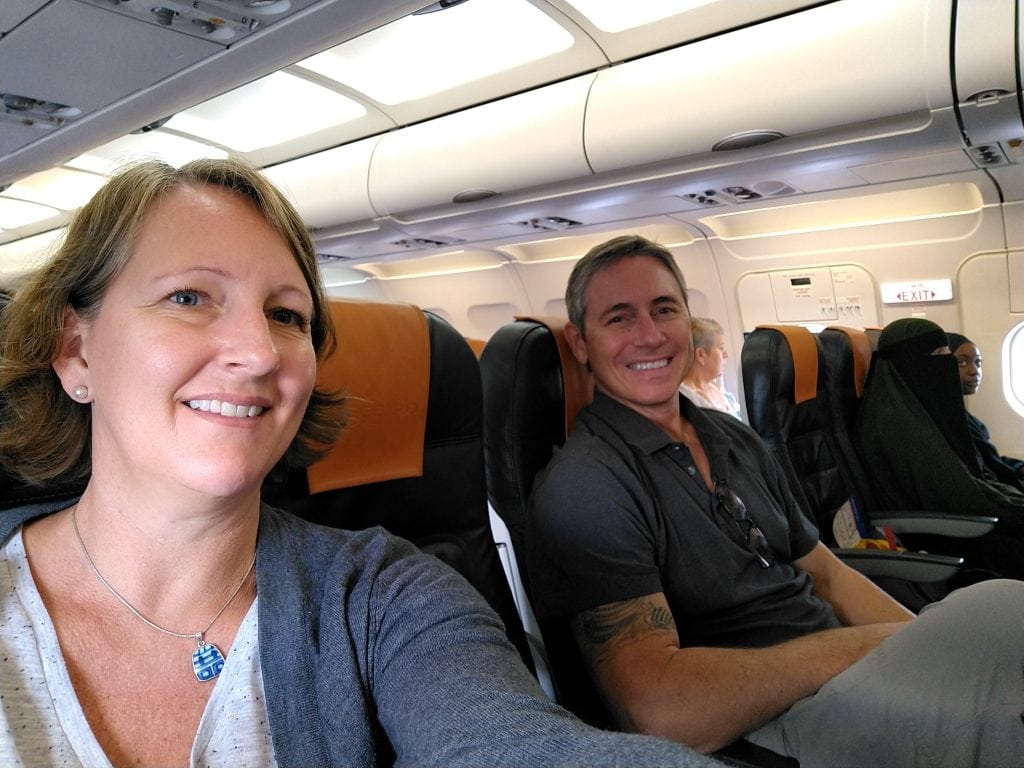
Main Travel Day Tips That Actually Work
After years of full-time travel, we’ve realised that smooth travel days aren’t about luck.
They’re about preparation, simplicity, and mindset.
Here are our most reliable tips for travel days that consistently make a difference.
1. Give Yourself Plenty of Time
This is our golden rule.
Leave earlier than you think you need to.
Traffic happens. Airport security lines grow unexpectedly. Trains get delayed. Ride shares cancel. Check-in desks move.
Arriving early:
- Reduces stress
- Allows time for bathroom breaks or coffee
- Gives breathing room if something goes wrong
- Sets a calmer tone for the day
We would much rather sit at a gate for 90 minutes than sprint through a terminal with our hearts racing.
When living a nomadic lifestyle, calm beats speed every time.
2. Pack Light (Mobility Matters More Than You Think)
We cannot emphasise this enough.
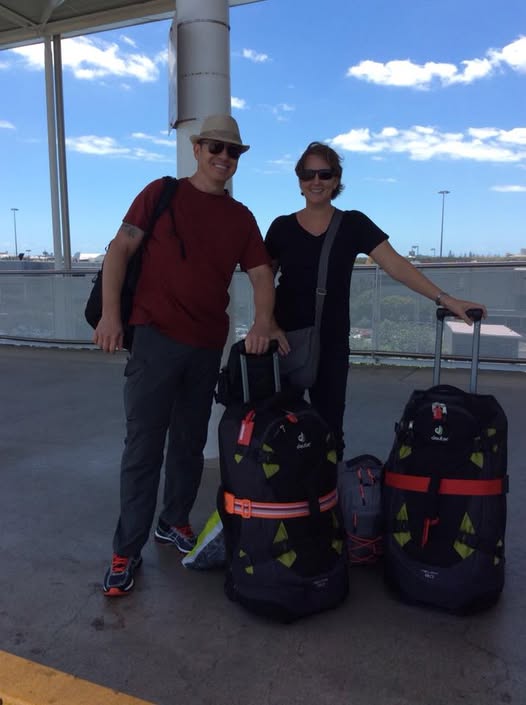
Lighter, smaller bags make travel days dramatically easier. Even though we do travel with a checked bag each plus a carry on, we ensure we keep our bags at a weight that we can manage carrying and navigating obstacles.
It’s not just about weight, it’s about:
- Navigating stairs without lifts
- Dealing with cobblestone streets
- Walking long distances between terminals
- Lifting bags onto trains or buses
- Fitting into small taxis
- Moving quickly when gates change
Every extra item becomes noticeable on travel days.
If you’re struggling on travel days, it’s often not the transport, it’s the luggage.
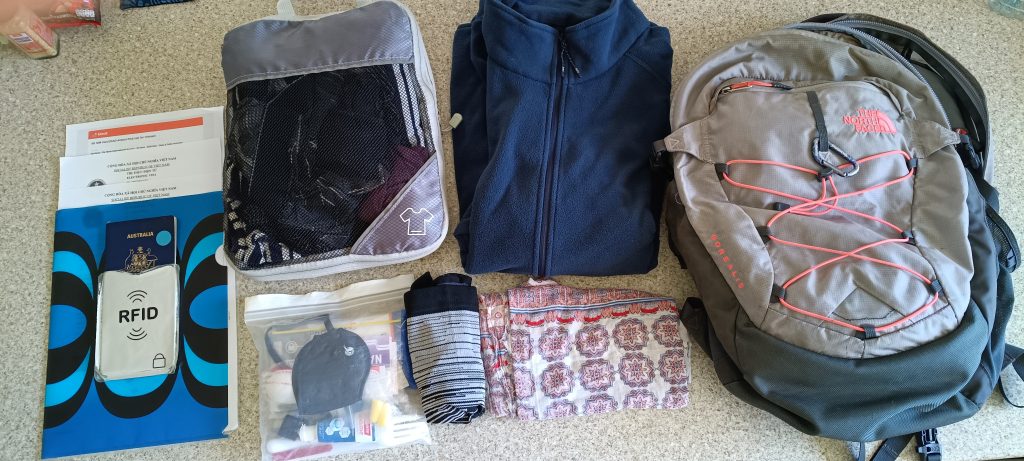
3. Keep Travel Documents Easy to Access
There is nothing more frustrating than digging through your bag at security while a queue builds behind you.
We keep our important travel documents:
- Passports
- Boarding passes
- Visa confirmations
- Insurance details
In a dedicated, easy-access pouch inside a cross-over bag.
Bonus Tip: Take photos of all important documents and keep digital copies stored securely. This is a part of our annual checklist in preparation for another year of travel. It’s a simple backup that provides enormous peace of mind.
4. Get a Good Night’s Sleep
Tiredness amplifies everything.
Minor inconveniences feel major. Small delays feel catastrophic.
Before big travel days, we prioritise:
- An early night
- Minimal alcohol
- Bags packed the day before
- Morning logistics sorted in advance
Being well-rested improves decision-making and patience, two essential skills on travel days.
5. Be Flexible and Expect Changes
This might be the most important tip of all.
Delays and cancellations happen. Baggage gets rerouted. Connections shift.
Instead of fighting it, we’ve learned to expect it.
When you mentally prepare for changes:
- You adapt faster
- You problem-solve more calmly
- You avoid spiralling frustration
Flexibility is not just a personality trait in nomad life, it’s a survival skill.
6. Don’t Blame Each Other When Things Go Wrong
This one was reinforced to us by Brent and Michael Are going Places, and it’s something we consciously practise on every travel day.
When plans unravel, it’s very easy to say:
- “You booked this connection.”
- “Why didn’t you check that?”
- “I thought you confirmed it.”
Blame creates tension. Tension clouds thinking. And cloudy thinking makes problem-solving harder.
Instead, we treat travel hiccups as a shared challenge:
- It’s us versus the situation, not us versus each other.
- We stay solution-focused.
- We keep our tone calm.
Avoiding blame keeps your partnership strong and your head clear which is exactly what you need when dealing with delays, rebooking’s, or unexpected changes.
In nomadic retirement, your relationship is your home base. Protecting that matters far more than being right.
Practical Travel Day Hacks From Real Nomads
Once you’ve mastered the big-picture mindset, it’s the small practical habits that make travel days significantly smoother.
These are the little systems we now use automatically.
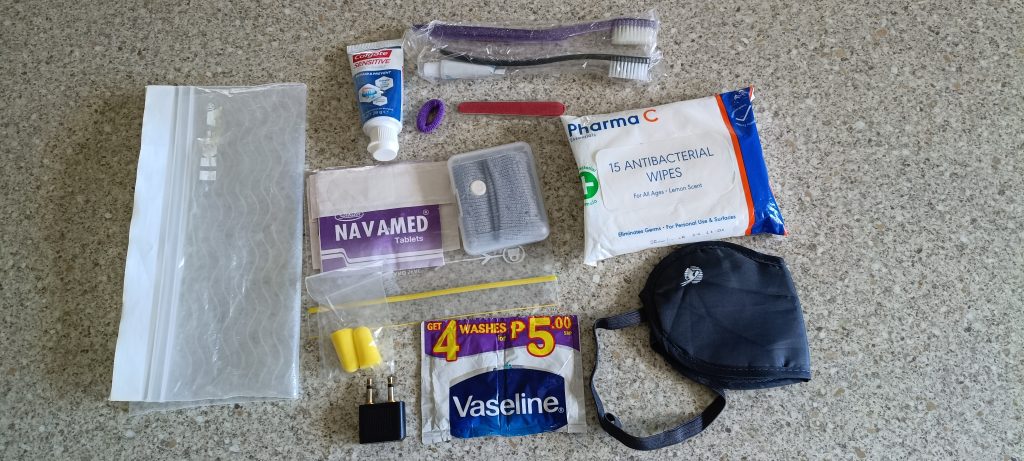
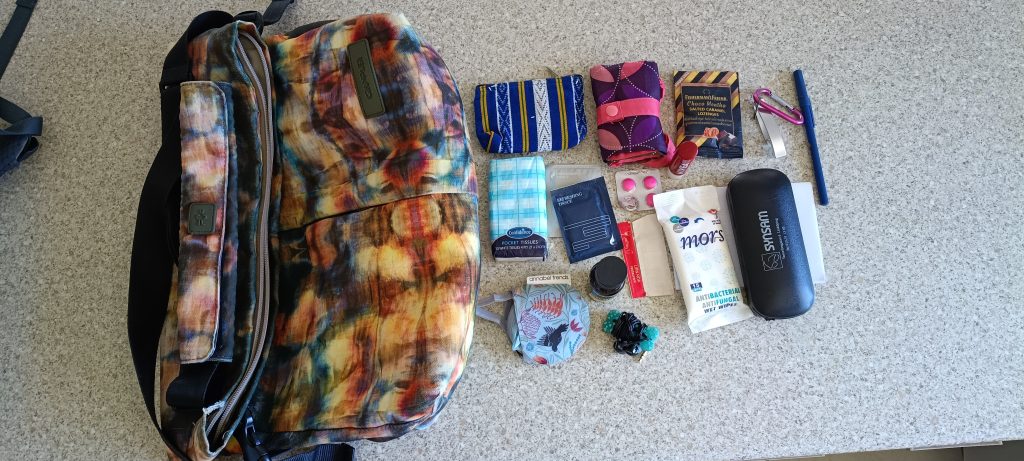
Pack a Small ‘Travel Day Kit’
We always carry a mini travel day kit that stays easily accessible in our carry-on.
Ours typically includes:
- Snacks (especially protein-based)
- A refillable water bottle
- Gum or mints
- Tissues
- Hand sanitiser
- Chargers and power bank
- Lip balm
- Basic medication such as headache tablets, motion sickness medication and band aids
- A large scarf (for Peta) for cold air-conditioning on flights, in airports or public transport
- Flight socks
- Eye mask
- Ear plugs (we always travel with Hearoes Earplugs) / Noise-cancelling headphones
Why?
Because travel almost always takes longer than expected.
When you’re hungry, dehydrated, or stuck without a charger, small inconveniences become big irritations.
A simple kit removes most of that friction.
Wear Your Bulkiest Items
If we’re travelling with boots, jackets, or heavier layers, we wear them.
Not only does this reduce luggage weight, it also:
- Makes security easier
- Frees up space in your bag
- Prepares you for unpredictable airport or cabin temperatures
Layers are key. Planes can be freezing, terminals can be warm, and arrival climates can be completely different.
Comfort equals calm.
Keep Frequently Used Items Within Reach
Anything you’ll use during transit should not be buried at the bottom of your bag.
This includes:
- Passport
- Boarding pass
- Phone
- Wallet
- Headphones
- Snacks
Digging through a large backpack at security or in a narrow plane aisle adds unnecessary stress.
Organisation on travel days is less about perfection and more about easy access.
Stay Hydrated (It Makes a Bigger Difference Than You Think)
Cabin air is dry. Long travel days dehydrate you faster than you realise.
We consciously drink water throughout the day, especially on flights.
Hydration helps with:
- Fatigue
- Headaches
- Swelling
- General irritability
It’s a small habit with a big payoff.
Wear Comfortable, Practical Clothing
We’ve learned to prioritise comfort over style on travel days.
Our go-to strategy:
- Comfortable layered clothing
- Slip-on or easy-remove shoes
- Socks (or compression socks for long flights)
You may walk far more than expected in airports or train stations.
Being physically comfortable reduces mental stress.
Treat Travel Days As ‘Light’ Days
This is one of the most important mindset shifts we’ve adopted.
We no longer:
- Plan big sightseeing days after arrival
- Book heavy activity schedules
- Expect peak productivity
Instead, we treat travel days as transition days.
Sometimes that means:
- A short neighbourhood walk
- A casual dinner nearby
- Or simply resting
When you stop expecting travel days to be perfect, they become much more manageable.
How to Rethink Travel Days Mentally
If there’s one thing that has improved our travel days more than anything else, it’s this:
We changed how we think about them.
Because here’s the truth, even with the best preparation, travel days can still be long, slow, and unpredictable.
And that’s okay.
Travel Days Are Part of the Lifestyle — Not an Interruption
Early on, we used to see travel days as something to ‘get through’. They felt like obstacles between us and the fun part of travel.
But over time, we realised:
Travel days are part of the experience.
They’re the in-between moments. The transitions. The reset points.
When you stop fighting that reality, they feel lighter.
Always Plan Buffer Time
One of the most consistent themes across experienced travellers is this: Travel takes longer than scheduled.
Flights may be two hours, but the travel day might be eight.
Trains may run on time, until they don’t.
Connections may look tight, until one small delay ripples through the day.
Building buffer time:
- Reduces anxiety
- Protects against missed connections
- Keeps decision-making clear
Assume things may stretch out. If they don’t, that’s a bonus.
Choose Travel Timing Strategically
We’ve experimented with different travel timing over the years.
Some strategies that work well:
- Mid-morning departures → Arrive close to check-in time and still have daylight to settle in.
- Early departures → Arrive earlier in the day and explore lightly.
- Late afternoon travel → Use most of the day where you are, then arrive ready to rest.
There’s no perfect formula, but being intentional about timing helps.
Instead of squeezing in every sightseeing opportunity, think about energy levels and practicality.
Accept That Travel Days Aren’t Always Fun
This may sound obvious, but it’s powerful.
Travel days are often:
- Physically tiring
- Logistically messy
- Slightly uncomfortable
And that’s normal.
When you expect them to be glamorous or seamless, disappointment follows.
When you expect them to require patience, you’re prepared.
This simple mental shift prevents a lot of unnecessary frustration.
Protect Your Energy
As retired nomads, we’ve learned that energy management matters more than squeezing in more experiences.
That means:
- Not arguing
- Not rushing
- Not over-scheduling
- Not reacting emotionally to small hiccups
A calm head solves problems far more effectively than a stressed one.
And when you’re living this lifestyle long term, sustainability matters.
FAQ’s: Tips for Travel Days
Now that you have read how we approach travel days, you might still have a few questions. Don’t worry, we’ve got you covered! Here are some frequently asked questions about travel days.
What are the best tips for travel days?
The best tips for travel days focus on preparation and mindset:
* Leave earlier than necessary
*Pack lighter than you think you need
* Keep travel documents easily accessible
* Hydrate and wear comfortable clothing
*Expect delays and stay flexible
Most travel day stress comes from rushing or unrealistic expectations, so building in extra time makes the biggest difference.
How do you make travel days less stressful?
To make travel days less stressful:
* Treat them as transition days rather than sightseeing days.
* Avoid over-scheduling activities upon arrival.
* Pack a small ‘travel day kit’ with essentials.
* Avoid blaming your travel partner when things go wrong.
Staying solution-focused instead of reactive keeps your head clear when dealing with delays or unexpected changes.
Should you plan activities on travel days?
In most cases, no.
* Travel days often take longer than scheduled due to:
* Security queues
* Transfers
* Traffic
* Check-in timing
* Delays
We recommend planning light exploration only i.e. a short walk, groceries, or a simple meal. Save major sightseeing for the following day.
How do full-time travellers handle long travel days?
Full-time travellers rely on systems:
* Minimal luggage
* Dedicated document pouches
* Digital backups of important paperwork
* Buffer time between connections
* A flexible mindset
Over time, travel days become more predictable because routines are in place.
What should you pack in a travel day carry-on?
A practical travel day carry-on should include:
* Passport and travel documents
* Phone charger and power bank
* Snacks
* Water bottle
* Medication
* Light layers
* Noise-cancelling headphones (if flying)
* Lip balm and moisturiser
Keeping these items accessible prevents unnecessary stress during transit.
How do you avoid arguments on travel days?
One of the most important travel day tips is this:
* Don’t assign blame.
* When something goes wrong, shift to:
“How do we solve this?” instead of “Who caused this?”
Keeping communication calm protects your relationship and makes problem-solving much easier.
In Summary: Travel Days Don’t Have To Be Stressful
After years of living a nomadic retirement lifestyle, we’ve come to see travel days differently.
They’re not glamorous.
They’re not usually the highlight.
And they’re rarely perfectly smooth.
But they don’t have to be stressful either.
With a bit of thoughtful preparation such as extra time, lighter packing, organised documents, proper rest, and a flexible mindset, travel days become manageable and even predictable.
Do you do any of the things listed above on your travel days, or have we missed any things we should add to this list? Feel free to contact us on Facebook or via email and let us know.
Planning Your Travels: Related Blog Posts
Want more info to help you with your travel planning? Check out all the articles we’ve written about how we do it and the ‘Best of World Travel’ in all parts of the world, and continue planning for your next trip.
TRAVEL PLANNING IN GENERAL
- How to Pick a Travel Destination: 13 Factors to Consider (Learn From Our Mistakes)
- 9 Best Travel Planning Apps Every Traveller Should Know
- How to Plan a Trip on Google My Maps: A Step-by-Step Guide
- How To Export Data From Google My Maps To Use Offline
BEST COUNTRIES TO TRAVEL TO IN…
JANUARY | FEBRUARY | MARCH | APRIL | MAY | JUNE | JULY | AUGUST | SEPTEMBER | OCTOBER | NOVEMBER | DECEMBER
BEST FESTIVALS AROUND THE WORLD IN…
JANUARY | FEBRUARY | MARCH | APRIL | MAY | JUNE | JULY | AUGUST | SEPTEMBER | OCTOBER | NOVEMBER | DECEMBER
FESTIVALS IN…
DISCLAIMER: This article contains affiliate links and Exit45 Travels are a participant in the Amazon Services LLC Associates Program. That means if you click a link and make a purchase, we make a small commission at no extra cost to you. Please see our disclosure policy for more information.
